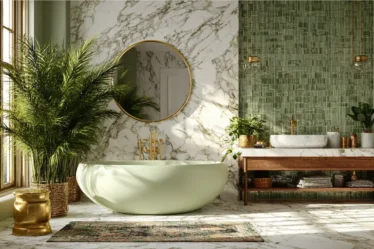
My bathroom looked like it belonged in a roadside motel. Peeling caulk. Builder-grade everything. A mirror that made me look perpetually tired. Every morning I walked in, felt embarrassed, and walked out.
I Googled “bathroom remodel” once. The results said $11,000 to $18,000. I closed the tab.
But here’s what I figured out after a lot of research and one very productive weekend: you don’t need a contractor. You don’t need a loan. You need to know which changes actually show — and which ones are a waste of money.
I spent $194 total. My bathroom looks like a completely different room.
This guide covers the exact steps I took, the exact products I bought, and the one thing I almost wasted $60 on (but didn’t). Whether you rent or own, you can do every single thing on this list.
Why Most Bathroom Budgets Get Wasted on the Wrong Things
The average bathroom remodel costs between $11,000 and $18,000 according to the National Kitchen and Bath Association. That number scares most people into doing nothing at all.
But here’s the part nobody talks about: 40 to 65 percent of that cost is labor. You’re paying someone to show up, carry tools, and do work you could do yourself in an afternoon.
The other problem is where people spend money. They replace the toilet. They re-tile the floor. They redo the plumbing. None of that is what you or your guests actually notice first.
Your eyes go to three things when you walk into a bathroom:
- The lighting
- The mirror
- The hardware
That’s it. Fix those three things and the room feels designed. Leave them outdated and nothing else matters, even if you spent a fortune on everything else.
Neutral and clean always beats trendy and expensive. A simple matte black towel bar from Walmart looks more intentional than a decorative chrome one from ten years ago. Once you understand where the visual impact lives, $200 becomes more than enough.
The Exact $200 Budget Breakdown (No Hidden Costs)
Here’s where every dollar went. Nothing was rounded down. Nothing was left out.
| What I Bought | What I Spent |
| New vanity light fixture | $49 |
| LED bulbs (2700K warm white) | $14 |
| Mirror frame kit | $42 |
| 3-piece hardware set (matte black) | $32 |
| Peel-and-stick backsplash tiles | $29 |
| Grout pen | $8 |
| Ceramic soap and toothbrush holder | $16 |
| Small pothos plant | $6 |
| Waffle-weave hand towels (set of 2) | $15 |
| Caulk and painter’s tape | $11 |
| Total | $222 |
Wait, that’s $222. Here’s the honest part: I already had the caulk and tape at home. If you don’t, budget $200 to $225 depending on what you have on hand. Every single item came from Home Depot, Target, Amazon, or IKEA. Nothing required special ordering or waiting weeks.
The goal wasn’t to spend exactly $200. The goal was to stay under $250 and make the room look like I spent $1,000. That happened.
Step 1: Change the Lighting First (This One Change Does the Most Work)

If you only do one thing on this list, do this.
Bad lighting makes everything look worse. It makes clean tile look dirty. It makes white walls look yellow. It makes your face look tired even when you’re not.
Most builder bathrooms come with a cheap 4-bulb bar light that pushes out harsh, flat light. It’s not flattering. It’s not functional. And it’s one of the easiest things to swap out.
What to buy: Look for a vanity light in matte black or brushed nickel. The Hampton Bay vanity bar at Home Depot runs around $49. Wayfair has similar options in the $45 to $70 range. Pick a style that’s simple. Skip anything decorative or trendy.
What bulbs to get: Bulb temperature matters more than people realize. Anything above 4000K looks cold and clinical. Anything below 2700K looks too yellow. Stay between 2700K and 3000K. Feit Electric LED A19 bulbs in 2700K cost about $14 for a 4-pack at Walmart or Amazon. That’s the sweet spot.
How hard is the swap? Turn off the breaker. Unscrew the old fixture. The new one connects to the same two wires. Total time: 20 to 30 minutes. No electrician needed.
One more trick: place a large mirror directly across from your window. It bounces natural light back into the room. The space feels brighter without any extra cost.
Before you touch anything else, stand in your bathroom after the new lighting goes in. You’ll already see the difference.
Step 2: Replace the Hardware (Small Details That Make the Room Look Designed)

Hardware is the jewelry of a bathroom. It’s small. It’s fast to swap. And it completely changes the feel of the room.
Most builder bathrooms come with chrome or brushed nickel hardware that’s thin, wobbly, and visibly cheap. Replacing it takes less than an hour and costs under $40.
What to look for: Buy a 3-piece set so everything matches. Towel bar, toilet paper holder, and a robe hook. Franklin Brass makes a matte black 3-piece set available at Walmart and Home Depot for $28 to $38. IKEA’s KALKGRUND series is a good brushed chrome option if you prefer that finish.
One important design note for 2026: mixing metals is no longer a mistake. Matte black fixtures with warm brass accessories is actually a current trend. So if you already have one piece you like, you don’t have to replace everything. Buy what’s missing and let the contrast be intentional.
How to install without wrecking your walls: Use the existing screw holes whenever possible. Most towel bars and toilet paper holders mount the same way. If you need to drill new holes, use wall anchors and fill the old holes with a small amount of spackle before painting or leaving as-is.
This step cost me $32 and took 45 minutes. It looks like it cost four times that.
Step 3: Upgrade the Mirror or Frame the One You Already Have

The mirror is one of the first things you see when you walk into a bathroom. It’s also one of the easiest things to improve.
Most builder bathrooms have a plain rectangle mirror glued directly to the wall. It works. But it looks unfinished. Adding a frame changes the whole feel of the vanity area.
Frame it instead of replacing it: Mirror frame kits attach directly over your existing mirror with no tools and no drilling. MirrorMate makes a popular version available at Home Depot and on their website. Prices run $40 to $80 depending on size. It takes about 20 minutes to install. Renters, this is especially worth your attention. It comes off clean when you move out.
Replace it if yours is damaged or too small: IKEA’s HOVET and NISSEDAL mirrors are clean, large, and affordable at $60 to $90. Size matters here. Go as wide as your vanity. A wider mirror makes a small bathroom feel bigger. That’s not a design theory. It actually works.
The DIY option if you want to spend less: Buy a few pieces of thin crown molding from Home Depot, cut the corners at 45 degrees, attach with liquid nail, and spray paint in matte black or white. Total cost: under $20. It takes patience but the result looks intentional and custom.
A well-framed mirror makes your bathroom feel like it gained square footage it never had.
Step 4: Use Peel-and-Stick Products (This Section Is for Renters Especially)

Renters, pay attention. But homeowners, don’t skip this. These products have gotten significantly better in the last two years.
Peel-and-stick backsplash, removable wallpaper, and grout pens can change the look of your bathroom without a single nail hole or permanent change. They come off clean. Most leave no residue.
Peel-and-stick backsplash: Put it on the wall behind your vanity. It creates a focal point and makes the vanity area look finished. Art3d makes a well-reviewed peel-and-stick tile available on Amazon for $28 to $35. That’s enough to cover a standard vanity backsplash area. Stick to subway tile or simple geometric patterns. They age better than trendy prints.
Removable wallpaper: Pick one wall, not four. In a small bathroom, covering every wall makes the space feel smaller and busier. One accent wall behind the toilet or opposite the vanity is enough. Chasing Paper sells removable wallpaper at Target and on their website. One roll for a small wall runs around $38.
The grout pen: This might be the highest return item in this entire guide. If your grout lines are yellowed or gray from years of buildup, a grout pen brings them back to bright white in about 20 minutes. Rust-Oleum makes one available at Home Depot for $8. The before and after difference is dramatic. Seriously, try this one first.
Contact paper for cabinets: If your vanity doors look dated, Con-Tact Brand marble-look contact paper from Amazon or Walmart runs about $14. It smooths on with a credit card and transforms builder-grade wood doors.
Step 5: Style It So It Looks Like Someone Actually Designed It

Everything before this step was installation. This step is about editing.
Most bathrooms don’t look bad because of what’s in them. They look bad because of too much of the wrong stuff. Expired products on the counter. Mismatched plastic containers. Three half-empty bottles of the same shampoo.
The rule of three: On any surface, use three things. One functional item (soap dispenser). One decorative item (a small ceramic dish or candle). One living item (a plant). That’s it. Remove everything else.
Swap the plastic: A ceramic or glass soap dispenser costs $14 to $18 on Amazon and looks ten times more intentional than a plastic pump bottle. A matching toothbrush holder completes the set. This is a small change with a big visual payoff.
Add a plant: Pothos and snake plants survive low light and bathroom humidity. Both are nearly impossible to kill. You can find them at Trader Joe’s, Walmart, or a local nursery for $5 to $10. A single small plant on a shelf or the back of the toilet makes the room feel alive.
Fold your towels: Roll hand towels into a small basket or fold them neatly on a bar. This sounds too simple to matter. It does matter. Hotels do it for a reason.
Add one small shelf: The Umbra Trigg shelf from Amazon or Target costs about $22. It mounts on the wall and gives you a place to display one or two items without cluttering the counter.
The goal isn’t more stuff. It’s the right stuff in the right place.
What I Would Skip (Save Your Budget for What Actually Shows)
Just as important as what to buy is what not to waste your money on.
Toilet seat replacement: You see it. Your guests barely notice it. Skip this unless yours is cracked or broken.
Fancy shower curtain rings: Spend $10 to $15 on simple matte rings. No one looks at the rings. They look at the curtain.
Trendy seasonal decor: Pumpkin soap dispensers in fall. Nautical themes in summer. These date quickly and cost money you could spend on something permanent.
Painting tile: It sounds like a great cheap fix. In practice, tile paint chips, peels, and looks worse within a year in a humid bathroom. Not worth it at this budget level.
Luxury bath mats with patterns: A clean, solid-color bath mat in white, gray, or charcoal looks more intentional than anything with a design on it. TJ Maxx has good options for $12 to $18.
Protecting your budget is part of the strategy. Spend where it shows. Skip everything else.
Your Bathroom Can Look Different by Next Weekend
Here’s the full picture. Five steps. One weekend.
- Swap the light fixture and bulbs
- Replace the hardware
- Frame or upgrade the mirror
- Use peel-and-stick products on the backsplash and grout
- Edit the accessories and add one plant
Total cost: under $200 to $225 depending on what you already have at home.
You don’t need a contractor. You don’t need a full renovation. You need to know which changes people actually see, and focus your money there.
Start with just one step this weekend. Grab a grout pen. Swap the bulbs. Frame the mirror. You don’t have to do everything at once.
A budget bathroom makeover doesn’t require a big loan or weeks of work. It requires knowing where your money does the most work. Now you know exactly where that is.
Prices listed reflect retail availability as of early 2026. Always verify current pricing at your local store or retailer website before purchasing.