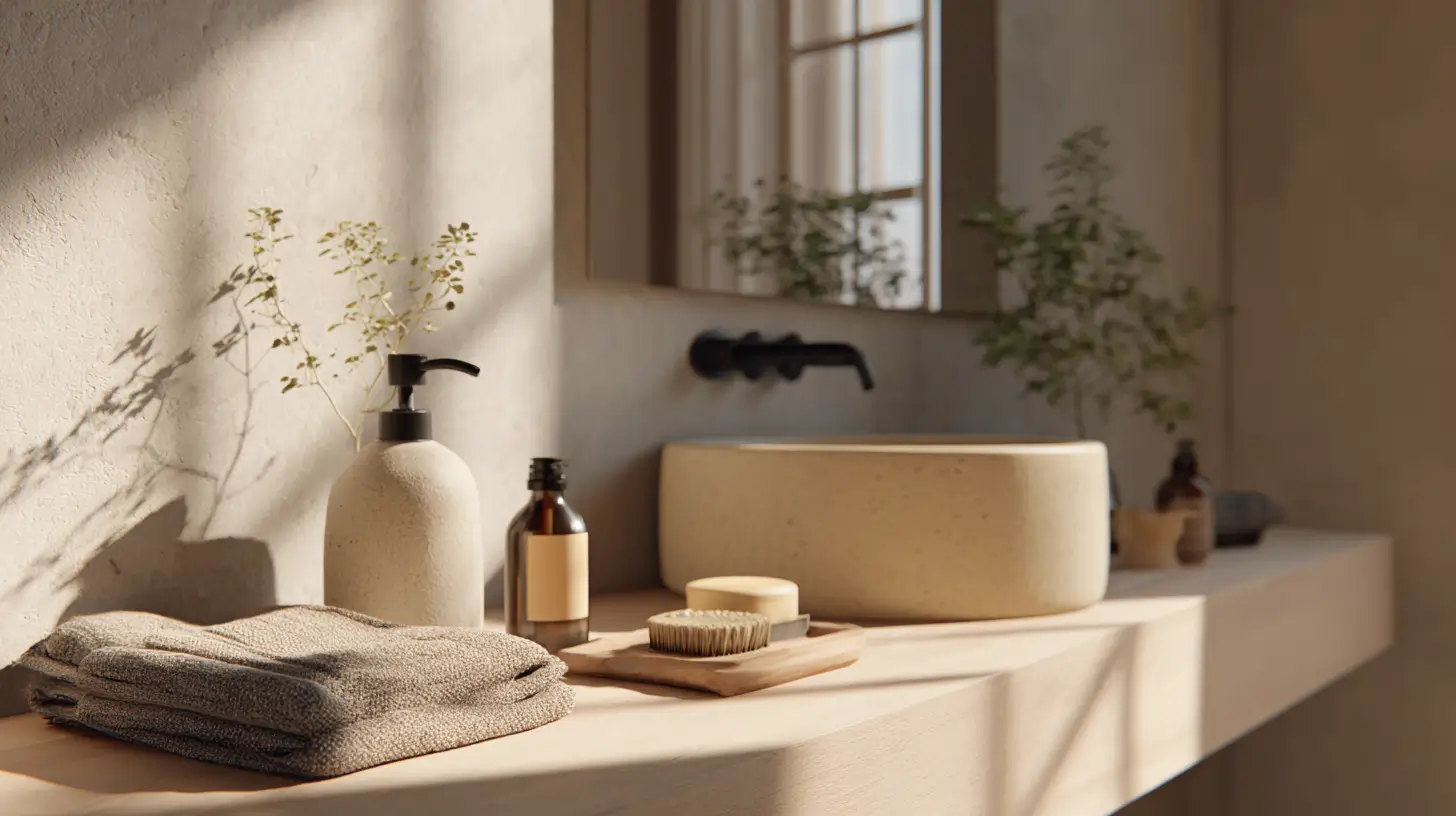
I used to spend 45 minutes in the bathroom every morning. And somehow, I always left feeling rushed.
Not because I was slow. Not because my routine was complicated on paper. But because my bathroom was a mess of half-used products, duplicate bottles, and things I kept “just in case.” Every morning started with small, exhausting choices. Which moisturizer today? Do I need the toner or skip it? Where did I put that thing?
By the time I walked out the door, I was already tired.
If that sounds familiar, this article is for you. You will learn how to strip your bathroom down to what actually matters, how to do it without panicking, and why a simpler space makes your whole morning feel different. No extreme minimalism. No empty shelves and one bar of soap. Just a bathroom that works for you instead of against you.
Why My Bathroom Was Wrecking My Mornings (And Yours Might Be Too)

The morning I counted my products, I found 27 items on my counter and under my sink. Twenty-seven. And I was only using maybe eight of them regularly.
The rest? They were “almost finished.” Or they were gifts I felt guilty throwing away. Or I bought them to fix a problem and then forgot about them when they didn’t work fast enough.
This is not unusual. According to research from Statista, the average American uses more than nine personal care products every day. Nine. And that number does not count the extras sitting in your cabinet.
Here is the problem with too much stuff. It is not just clutter. It actually affects how your brain works. A study from the Princeton Neuroscience Institute found that visual clutter makes it harder to focus. Your brain sees unfinished tasks everywhere it looks. That raises your stress levels before your day has even started.
The American Psychological Association has also documented that making too many small decisions early in the day drains your mental energy. This is called decision fatigue. And it starts in your bathroom.
The Bureau of Labor Statistics reports that Americans spend an average of over 30 minutes getting ready each morning. That time should feel worth it. For most people, it does not.
So when did your bathroom stop feeling like a calm space and start feeling like a storage unit?
What “Minimalist Bathroom” Actually Means in 2026

Let’s clear something up first. A minimalist bathroom does not mean a single bar of soap and a white towel.
It does not mean your bathroom has to look like a hotel room or a Pinterest board. It does not mean throwing away everything that gives you comfort.
It means owning what you actually use. And using what you actually own.
That is it. That is the whole idea.
A good way to think about it is three categories:
Daily Essentials are the products you use every single day. These live on your counter or in easy reach. This is your short list.
Weekly Rituals are things you use a few times a week. A face mask. A deep conditioner. These go under the sink or in a drawer.
Occasional Needs are things you genuinely need sometimes, like medication or specific treatments. These can live further away because you are not reaching for them every morning.
Joshua Becker, who runs Becoming Minimalist, puts it well. He writes that intentional living is not about owning less for the sake of it. It is about making sure what you own is actually serving your life.
Your capsule bathroom essentials will look different from your neighbor’s. A 22-year-old with oily skin and a 40-year-old managing rosacea need different things. That is fine. The framework stays the same even when the products change.
The Bathroom Audit: How to Clear It Out Without Losing Your Mind

Clear a Sunday morning. Not an afternoon. A morning, when your head is fresh.
Pull everything out. Off the counter. Out of the cabinet. Out from under the sink. Put it all on the bathroom floor.
Yes, all of it.
Now you can see what you actually own. Take a photo before you start sorting. You will want proof later.
Step 1: Sort into three piles.
Keep. Discard or donate. Relocate somewhere else in the house.
The “keep” pile is only for things you have used in the last 30 days. Not things you plan to use. Not things you used six months ago. Things you actually reached for this month.
Step 2: Check expiry dates.
The FDA is clear that most cosmetics and personal care products have a shelf life. Many people keep things for years past that date. Look for the PAO symbol on the packaging. It looks like a small open jar with a number inside. “12M” means 12 months after opening.
Most people throw out 30 to 50 percent of what they own during this step alone.
Step 3: Deal with the “duplicates trap.”
This is where most bathroom clutter lives. You bought a moisturizer. It was okay but not great. So you bought another one to fix the problem the first one did not solve. And then a third.
Now you have three half-empty moisturizers and none of them feel like the right choice.
If you have duplicates, pick one. Use it until it is empty. Then decide if you want it again.
Step 4: Be honest about the expensive mistakes.
You spent $50 on a serum. You used it twice. It has been sitting there for eight months making you feel guilty every time you look at it.
The money is already gone. Keeping the product does not bring the money back. Let it go.
By the time you are done, you will know exactly what your bathroom actually needs. And it is almost certainly less than what was in there.
The Capsule Bathroom: What to Actually Keep

Here is what a functional, minimal bathroom actually looks like. Use this as a starting point, not a rule.
Skincare (face): A gentle cleanser, a moisturizer with SPF, and one treatment product for your specific concern. That is three products. Dermatologists like Dr. Shereene Idriss have said publicly that most people do not need a ten-step routine. Consistency with a few good products works better than rotating through many.
Hair: Shampoo, conditioner, and one styling product if you use one. If you find a 2-in-1 that works for your hair, even better.
Body: A bar soap or body wash. Deodorant. That covers it for most people.
Multi-use products save you space and money. A tinted moisturizer with SPF does the job of three separate products. Some face oils work on hair ends too. You do not need a product for every single task if one product can do two jobs well.
Look for quality over quantity here. One excellent cleanser beats three average ones every time. The math works out in your favor.
My current bathroom counter holds seven products. Every single one gets used every week. Nothing sits there collecting dust.
What Actually Changed After I Simplified My Bathroom

Three months after the audit, I timed myself getting ready. Eighteen minutes. Including a shower.
That was 27 minutes less than before. Every single day.
But the time was not the biggest change. The bigger change was how I felt while doing it. There were no choices to make. I knew exactly what I was reaching for. The routine ran itself.
This is what researchers mean when they talk about habit automation. Phillippa Lally at University College London studied habit formation and found that new routines take anywhere from 18 to 254 days to feel automatic. The median is around 66 days. Simpler routines get there faster because there are fewer things to remember and fewer decisions to make.
The financial savings surprised me too. I stopped buying new things because I was actually finishing what I had. I became very deliberate about what I replaced. My monthly spending on personal care products dropped significantly.
What I did not miss was the part I expected to miss most: the options. I thought I would feel limited. I did not. I felt lighter.
The first week was the hardest. I kept thinking I was missing something. I was not. That feeling fades around week three.
There were moments I wondered if I had gone too far. I had not. But the doubt is worth knowing about so it does not catch you off guard.
The Simple System That Keeps Your Bathroom From Filling Back Up

The audit is the hard part. What comes after is much easier. Here is the system.
One in, one out. Every time a new product comes into your bathroom, one product leaves. No exceptions. This single rule does more to maintain a minimal bathroom than anything else.
Monthly 10-minute resets. Once a month, spend ten minutes looking at what is in your bathroom. Toss anything expired. Move anything that does not belong. This replaces the annual purge because things never get that bad.
Counter rule: daily use only. If you do not use it every single day, it does not live on the counter. This keeps the visual clutter under control without much effort.
Gift strategy. Someone gives you a product that does not fit your system. Thank them. Try it if you like. If it is not replacing something, it does not earn a permanent spot. You can donate unopened products to local shelters that accept personal care items.
Shared bathrooms. If you share your space, this gets more personal. You can only control your own shelf or your own section. Start there. Some people find that when one person simplifies, the other gets curious.
This is not a purity test. If a product earns its way back in, that is fine. The goal is not an empty bathroom. The goal is a bathroom that works for you every single morning without adding stress to your day.
Start With One Shelf

Your bathroom is where your day begins. Not at the office. Not at breakfast. Right there, in that small room, before most people have said a word to you.
What that space feels like matters.
You do not need to overhaul everything today. Start with one shelf. Pull everything off it. Put back only what you used this week.
See how that feels.
Your minimalist bathroom routine does not have to look like anyone else’s. It just has to work for you, every single morning, without the chaos.
That is worth more than 27 bottles of stuff you are not using.