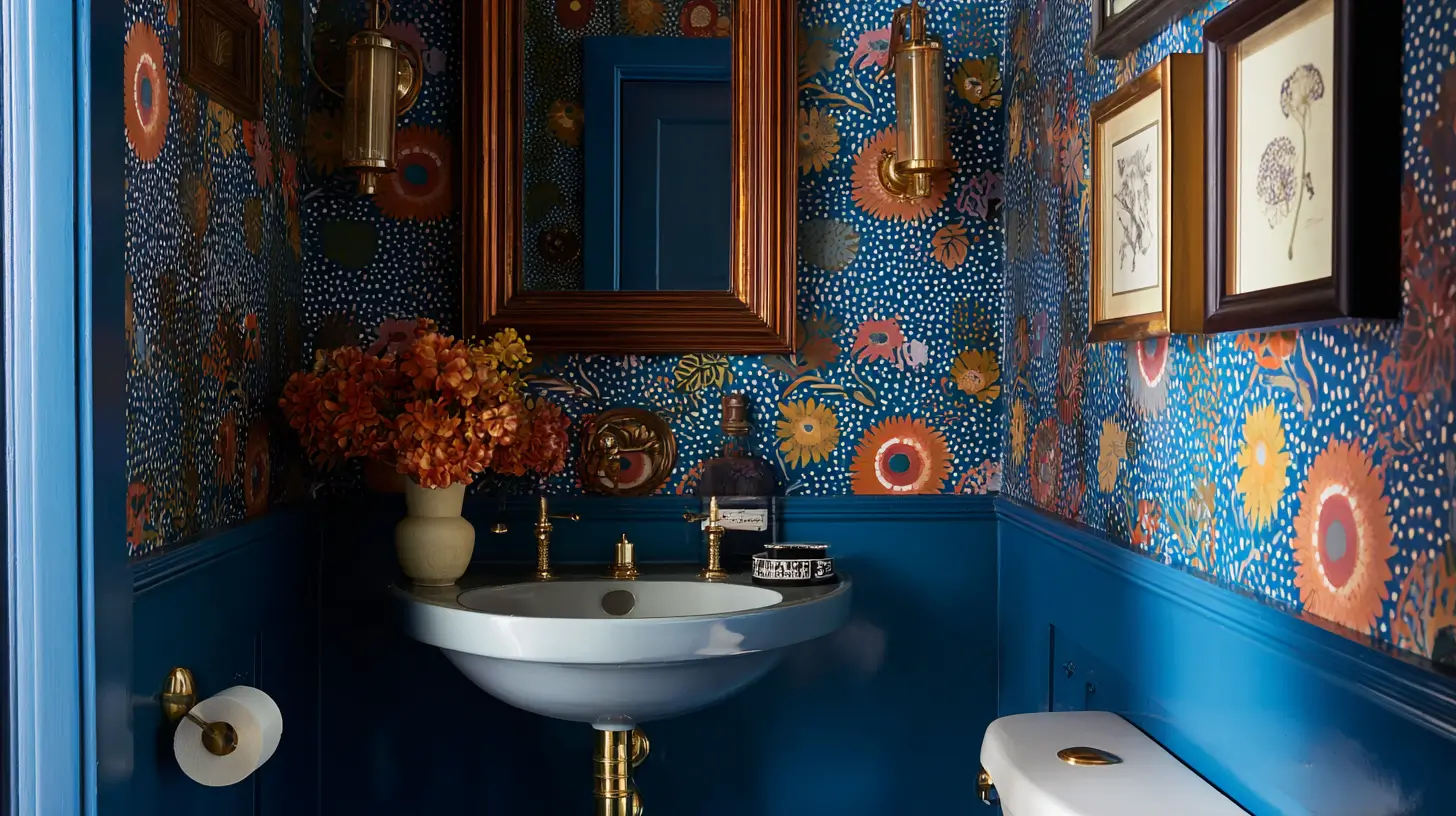
Your Bathroom Is Small. That Does Not Mean It Has to Feel Small.
The average American bathroom is just 40 square feet. That is smaller than a parking space. Yet every morning, you are expected to shower, get dressed, and feel human in there.
If your bathroom feels cramped, dark, and impossible to keep tidy, you are not alone. Most small bathrooms are not bad because of their size. They are bad because of bad design choices. The wrong tile. The wrong light. Too much stuff on the counter.
Here is the good news. You do not need to knock down walls. You do not need a $20,000 renovation. You need smart, specific changes that trick the eye and use every inch well.
This guide gives you 16 real ideas. Some cost under $20. Some take one afternoon. All of them work. Read through, pick two or three that fit your budget, and start this weekend.
Why Small Bathrooms Feel So Cramped (And What Actually Fixes It)
Before the list, you need to know one thing. Square footage is not your real problem.
Your brain decides if a room feels big or small based on visual cues. How much light is there? How far can your eye travel before hitting a wall? How cluttered is the surface? A 40 sq ft bathroom with good light, a big mirror, and clear surfaces will feel bigger than a 60 sq ft bathroom with dark paint, a shower curtain blocking the view, and stuff piled on every ledge.
That is the whole game. You are not adding square footage. You are removing the things that make your brain feel trapped.
The National Kitchen and Bath Association reports that the average small U.S. bathroom sits between 35 and 40 sq ft. Most design tips you find online give you the same three recycled ideas. This list goes deeper. It tells you what to buy, what it costs, and why it works.
Now here are the 16 ideas.
1. Go Floor to Ceiling With Your Storage

Most people store things from the floor up to about five feet. But your ceiling is probably eight feet high. That means three feet of wall space sitting completely empty above your head.
Use it. A tall, narrow shelving unit pulls your eye upward. That makes the room feel taller. The space above your toilet is one of the most wasted spots in any home. The top of the toilet tank is about 28 to 30 inches off the floor. Everything above that is open wall.
IKEA’s ENHET bathroom series lets you stack modular cabinets and shelves all the way up. It is available now and works for both renters and owners. An over toilet cabinet adds roughly 15 to 20 cubic feet of storage without using a single inch of floor space.
One tip: keep your baskets or bins in the same color and style. Mismatched containers on open shelves create visual noise. Same color, same style, the shelves look clean and organized.
Do this first if your bathroom has no storage at all.
2. Use Large Floor Tiles, Not Small Ones

This one surprises people. You might think small tiles make sense for a small room. They do not.
Small tiles create more grout lines. More grout lines mean more visual interruptions. Your eye hits each line and the floor looks busy and broken up. A large tile, like a 12×24 or 24×24 inch porcelain slab, has far fewer grout lines. The floor looks like one continuous surface. That reads as space.
The Tile Council of North America supports this. Fewer grout lines equal more visual continuity, which makes floors look larger.
You can find 12×24 porcelain tiles at Home Depot or Lowe’s for $2 to $6 per square foot in 2026. They are not expensive. And if your installer lays them on a diagonal angle, they add an extra space expanding effect on top.
One honest note: this idea only applies when you are already retiling. If your current floor is fine, skip this for now and come back to it during a future renovation.
3. Install a Floating Vanity

A floating vanity is mounted to the wall. The floor underneath it is clear. Nothing sits on the ground.
Here is why that matters. When your eye can see the floor running underneath the vanity all the way to the wall, your brain reads the room as bigger. It is the same reason furniture with legs looks lighter than furniture with a solid base.
The sweet spot for mounting height is 32 to 36 inches from the floor. This is also ADA compliant, which means it works for most adults comfortably. Clearing just 6 to 8 inches of visible floor makes a bathroom feel noticeably more open.
IKEA’s GODMORGON floating vanity starts around $150. Solid wood options from Ronbow or similar brands run $600 to $800 and up. Wayfair has solid middle options in the $200 to $400 range.
One thing to check before you buy: you need wall access for the drain pipe. If your current plumbing runs through the floor, a floating vanity may require a plumber to reroute it. Budget $100 to $300 extra for that if needed.
This is one of the highest return upgrades you can make in a small bathroom.
4. Replace Your Shower Curtain With Glass

A shower curtain cuts your bathroom in half. Even if it is pulled to the side, your eye knows the boundary is there. A clear glass panel removes that wall entirely.
With glass, your eye travels all the way to the back wall of the shower. The whole room opens up. Frameless glass enclosures run $300 to $900 installed, depending on size and contractor rates in 2025 to 2026.
That sounds like a lot. But here is the budget version: a clear vinyl shower curtain. Not frosted, not patterned. Clear. It costs $15 to $40 on Amazon or at Target and achieves about 70 percent of the same visual effect. You can do this today.
If you go with real glass, ask about a Rain X treatment for the panels. It repels water and cuts your cleaning time significantly. Hard water stains are the one real downside of glass. A daily 30 second squeegee habit handles most of it.
5. Pick Light, Monochromatic Colors

Dark colors absorb light. Light colors reflect it. This is basic physics, and it applies directly to how big your bathroom feels.
A monochromatic color scheme means using one color in different shades throughout the room. Walls, tiles, towels, and accessories all stay in the same color family. This removes visual contrast, which removes the sense of boundaries, which makes the room feel larger.
The best small bathroom paint colors for 2026 include soft white, warm greige, pale sage, and blush tones. Benjamin Moore measures colors using a Light Reflectance Value, or LRV. Anything above 70 LRV is ideal for a small room. Sherwin Williams Alabaster is a popular choice that scores around 82 LRV.
Sherwin Williams named Quietude (a soft blue green) as a 2026 color of the year. It works well in small bathrooms that get decent natural light.
One detail most people miss: paint your ceiling the same color as your walls. Most people use white ceilings with colored walls. That creates a hard visual border at the top of the room. Remove that border and the room feels taller.
Use eggshell or satin finish, not flat. Bathrooms are humid. Flat paint traps moisture and peels. Satin also reflects more light, which adds to the space expanding effect.
6. Add a Mirror That Is Too Big

Most people put a mirror that feels proportional to the space. That is the wrong move. Go bigger.
Mirrors reflect the room back at you. A large mirror visually doubles the depth of the space your eye perceives. The rule interior designers use: your mirror should be at least as wide as the vanity below it. Wider is better.
LED backlit mirrors do two jobs. They reflect space and they light your face properly. Brands like Neutypechic, Kohler Verdera, and Amazon’s own line all offer LED mirrors for under $150. A backlit mirror eliminates the shadow problem you get from a single overhead light.
Medicine cabinet mirrors are worth considering too. They open to reveal shelves inside the wall. You get a large reflective surface and hidden storage in one fixture. That is a smart trade in a small bathroom.
One quick note: two mirrors facing each other creates an infinite reflection effect. Some people love it. Some find it disorienting. Use that trick only if you have tested it first.
7. Get More Natural Light Into the Room

Natural light is the strongest tool you have. Nothing makes a room feel bigger like actual sunlight.
If you have a window, protect the light it brings in. Switch to frosted window film instead of opaque blinds or curtains. Frosted film gives you privacy without blocking the light. Brands like Rabbitgoo and Coavas sell rolls on Amazon for $15 to $30. Installation takes under an hour and requires no tools beyond a spray bottle and a squeegee.
Top down, bottom up cellular shades are another option. You lower the top half for privacy at eye level while keeping the top of the window fully open to light.
If your bathroom has no window at all, look up Solatube. These are tubular skylights that pipe natural light from your roof down through a reflective tube into the room. They start around $500 installed and are a real option for interior bathrooms. Most people have never heard of them, but they work.
Place a mirror directly opposite any window you have. The mirror catches the light and bounces it back across the room. It effectively doubles your natural light for free.
8. Switch to a Wall Hung or Slim Pedestal Toilet

A standard floor toilet has visual weight. The base, the skirt, the tank all anchor the fixture to the floor and make the room feel heavier.
A wall hung toilet mounts directly to the wall. The floor underneath is completely clear. The tank hides inside the wall using what is called an in wall cistern. Geberit is the most common brand for this system. It requires about four inches of wall depth and is now increasingly available in U.S. renovations, not just European ones.
TOTO and Duravit are the two most trusted wall hung toilet brands available in 2026. Expect to pay $500 to $2,000 or more installed. This is the most expensive idea on this list. Be honest with yourself about whether it fits your budget.
If it does not, a slim pedestal toilet is a reasonable alternative. It has no skirt and no bulk around the base. It does not float, but it takes up much less visual space than a standard model. Kohler offers compact toilet options as short as 28.5 inches from the wall, compared to the standard 30 to 32 inches.
9. Build a Recessed Shelf Into the Wall

This is the cleverest storage trick on the list. It adds storage depth without using any floor space at all.
A recessed niche is a shelf built into the gap between two wall studs. Standard stud spacing in most U.S. homes is 16 inches. That gives you roughly a 14 inch wide opening. It is enough for shampoo, soap, a razor, and a few other daily items.
The most popular place is inside the shower wall. You tile the inside of the niche to match the shower surround and it looks like it was always meant to be there. Above the toilet works well too.
Pre fabricated shower niches from Schluter or Redi Niche cost $30 to $80 at tile supply stores. They are waterproof and designed for DIY installation. If you are comfortable with basic drywall cutting and tiling, this is a solid weekend project.
One recessed niche adds one to two cubic feet of storage with zero floor footprint. If you are in the middle of a bathroom update anyway, build one in. You will use it every single day.
10. Layer Your Lighting Properly

Most small bathrooms have one light. It sits in the center of the ceiling. It casts shadows on your face and makes the room feel like a cave.
Good lighting has three layers. First, ambient light from the ceiling for general illumination. Second, task lighting mounted at the sides of your mirror, not above it, so your face is evenly lit with no shadows. Third, accent lighting underneath your floating vanity or along toe kicks.
Color temperature matters too. Bulbs are measured in Kelvin. 2700K to 3000K gives you warm white light, which feels relaxing and residential. 3500K gives you cleaner, brighter light that works better for grooming tasks. A smart bulb lets you switch between them for morning versus evening.
Lutron Caseta smart dimmer switches work with your existing wiring and cost $60 to $80. They let you control the feel of the room without rewiring anything.
Side mounted mirror sconces reduce facial shadows by a wide margin compared to overhead lighting. This makes your bathroom look more finished and more spacious. It is one of the most cost effective upgrades you can make.
11. Use the One In, One Out Rule for Products

No storage system saves a cluttered bathroom. You have to control what comes in.
The one in, one out rule is simple. Every time you bring a new product into the bathroom, one existing product leaves. No exceptions. This keeps the count stable over time.
Start with your countertop. Only daily use items should be visible. Everything else goes in a drawer, cabinet, or under the sink. Visible items should be minimal: hand soap, one face wash, a toothbrush holder. That is it.
Under the sink is usually wasted space. Tiered organizers, pull out drawer inserts, and tension rods for spray bottles can turn that cabinet into a functional storage zone. The Container Store sells under sink drawer inserts for $20 to $60.
Research consistently shows that visual clutter raises stress levels. A bathroom counter with five items on it feels calm. The same counter with fifteen items feels chaotic, even if the room itself has not changed. Decluttering is not just organizing. It is a design strategy.
Do a quarterly audit. Toss expired products. Relocate things that do not belong in a bathroom. Keep only what you actually use every week.
12. Choose Fixtures Built for Small Spaces

Standard fixtures are built for standard sized rooms. You do not have a standard sized room. So stop buying standard fixtures.
Compact toilets from Kohler sit as close as 28.5 inches from wall to front edge. A standard toilet runs 30 to 32 inches. That difference of two to three inches is real usable space.
Compact vanities come in 18 inch depths instead of the standard 21 inch. Both are widely available at Home Depot, Lowe’s, and Wayfair in 2026. Three inches does not sound like much. In a bathroom under 40 sq ft, it changes how the room feels to move around in.
Corner fixtures solve the dead corner problem. Corner sinks start at $80 for a pedestal model and are a genuine solution for bathrooms under 35 sq ft where a standard sink placement blocks movement. Corner showers are a bigger investment but transform extremely small layouts.
Narrow towel bars, slim robe hooks, and fold flat toilet paper holders all reduce the visual clutter on walls. Small details add up.
13. Run Your Tiles Vertically

Most people install subway tiles horizontally. It is the default. But vertical tile installation does something horizontal cannot: it adds perceived height.
A vertically installed subway tile in a running bond pattern draws your eye upward. The room feels taller. A herringbone pattern installed vertically does the same thing with more visual interest. Both are trending in 2026 bathroom design.
The bigger move is to tile all the way to the ceiling. Most bathrooms stop tiling at 5 or 6 feet. That stopping point creates a visual border that makes the room feel shorter. Remove the border by tiling to the ceiling and the room reads as taller with no structural changes.
Using the same tile on both the walls and inside the shower enclosure removes another visual boundary. Instead of seeing distinct zones, you see one continuous surface. Continuous surfaces feel bigger.
3×6 inch subway tile costs $1.50 to $4 per square foot for materials. Labor runs $5 to $10 per sq ft depending on your area. This is a significant project, but the visual payoff is high.
14. Replace Your Hinged Door With a Pocket or Barn Door

Your bathroom door steals space every time it opens. A standard hinged door needs 9 to 15 square feet of clear floor space to swing open. In a small bathroom, that is floor space you cannot use for anything else.
A pocket door slides directly into the wall. When open, it disappears. The floor space is fully reclaimed. Pocket door installation averages $300 to $700 depending on whether the wall framing needs modification.
A barn door slides along the outside of the wall. It does not require opening a wall. Barn door hardware kits at Home Depot or Amazon run $80 to $250 for a DIY installation. The door itself adds some rustic or modern character depending on the style you choose.
One honest limitation: barn doors do not seal as tightly as hinged doors. If sound privacy matters to you, a pocket door is the better choice.
For renters who cannot modify anything: a pivot style curtain panel on a tension rod at the doorway gives some separation without any permanent changes.
15. Choose Furniture With Legs or Made From Clear Materials

Furniture that sits flat on the floor with no legs creates a visual block. Your eye stops at the base and the floor feels chopped up. Furniture with legs lets you see the floor underneath. That continuous floor view makes the room feel more open.
Acrylic and lucite materials take this further. They are physically there, but visually they are almost invisible. An acrylic stool, a clear shower caddy, transparent soap dispensers: they hold things without adding visual weight.
CB2, West Elm, and Amazon all carry acrylic bathroom accessories in 2026. A small acrylic bath tray costs $15 to $40. A solid wood tray of the same size does the same job but visually fills the space twice as much.
Apply this idea to any furniture you consider bringing into the bathroom. Ask: can you see the floor underneath it? If yes, it is probably the right choice.
16. Create One Strong Focal Point

Here is the final idea and it works differently from the rest. Instead of trying to make the room look invisible, you give people something specific to look at.
A strong focal point pulls the eye to one intentional spot. When that happens, the brain stops measuring the room and starts appreciating the design. Guests notice the beautiful thing you chose, not the square footage.
Your focal point options are wide. A bold patterned tile on the back shower wall. A statement mirror with an unusual frame. A dramatic light fixture above the vanity. A cluster of rattan and wood accessories that give the room warmth and texture.
Eucalyptus bundles hung from the shower head have been popular since 2022 and remain mainstream in 2026. They add scent, color, and a spa feeling that makes even a small bathroom feel like a treat.
A single statement light fixture swap costs under $100 at Schoolhouse Electric, West Elm, or Amazon. It takes about 30 minutes to install if you are comfortable with basic electrical work.
The goal is simple. Make the room worth noticing. When it is, nobody cares that it is small.
Where to Start When Everything Feels Overwhelming
Reading 16 ideas at once can feel like a lot. Here is how to break it down.
Pick one visual idea that costs under $50. A clear shower curtain, a large mirror, or a can of light paint will each make an immediate difference. Do that this week.
Then pick one storage idea. Vertical shelving above the toilet or a recessed niche if you have a project coming up. Do that within the month.
After that, look at your fixtures. If your toilet or vanity is due for replacement anyway, upgrade to a compact or floating version. Let the renovation cycle work in your favor.
With the right small bathroom ideas, even a 35 square foot space can feel calm, organized, and surprisingly open. You do not need more room. You need smarter choices.
Start with one. See what it does. Then do the next one.