Introduction
Your living room should feel like the best part of coming home.
But for most people, it just feels like a room with furniture in it. The couch is fine. The TV works. And yet something feels off. It feels empty. Or cold. Or like it belongs to someone else.
You’ve probably scrolled through Pinterest and Instagram for hours. You see beautiful rooms. Warm, soft, inviting spaces. But you have no idea how to get there. And everything looks expensive.
Here’s the truth. A cozy living room isn’t about money. It’s about knowing which small changes actually make a difference.
This guide gives you 17 specific, doable ideas. Some cost nothing. Some cost less than your last takeout order. Each one moves your room from “just a room” to the place you actually want to spend your time.
You don’t need to do all 17. Start with one. See what happens.
These cozy living room ideas work in small apartments, open floor plans, rental spaces, and owned homes. They work whether your style is modern, rustic, or “I don’t really have a style yet.”
Let’s get into it.
1. Fix Your Lighting First. Everything Else Comes After.

Most living rooms have one light source. The overhead fixture on the ceiling.
And that single light is quietly making your room feel like a waiting room at a doctor’s office.
Overhead lighting points straight down. It creates harsh shadows. It flattens the room. It makes everything feel flat and cold, even when the rest of your decor is nice.
The fix is called layered lighting. It means having three types of light working together:
Ambient light is your main, soft background glow. Think floor lamps and table lamps. Task light is for specific spots. A lamp near your reading chair. A light over a work area. Accent light adds warmth. Think string lights, candles, or a small lamp on a shelf.
You don’t need to rewire anything. You don’t need an electrician. Start by adding one floor lamp in a dark corner. Plug it in. Turn off the overhead light. Notice the difference immediately.
Next, swap your bulbs. Look for bulbs labeled 2700K or 3000K. That number is the color temperature. 2700K is warm and golden, close to candlelight. 3000K is a little brighter but still soft. Anything above 4000K looks cold and clinical.
A warm LED bulb costs about $5 at any hardware store. It’s one of the highest impact, lowest cost changes you can make in any room.
Quick win: Buy one dimmable floor lamp and one warm LED bulb this week. Put the lamp in the darkest corner of your room. Turn off the overhead light at night. Your room will feel completely different in under 10 minutes.
2. Get a Rug That Actually Fits Your Room

A rug that’s too small is worse than no rug at all.
This is the single most common living room mistake that interior designers point out. People buy a rug that fits the coffee table. But it leaves the sofa legs floating on bare floor. The whole seating area looks disconnected, like the furniture is just parked in the middle of nowhere.
A rug’s job is to anchor the room. It tells your eye where the seating area begins and ends. It creates what feels like a defined zone, a “nest” inside the larger room. That feeling of a contained, warm space is a big part of what makes a room feel cozy.
The sizing rule is simple. For a standard living room sofa setup, go with at least an 8×10 foot rug. All front legs of your sofa and chairs should sit on the rug. If you can afford it, get all four legs on.
For materials, wool is the warmest and most durable but costs more. Chenille is soft and budget friendly. Jute looks great but feels rough underfoot. For maximum coziness, wool or chenille wins.
One trick that is very popular right now is layering two rugs. Put a flat weave or natural fiber rug down as the base. Then layer a smaller, softer shag rug on top in the center. It adds texture and warmth and makes the whole space feel more intentional.
Quick win: Measure your seating area before buying anything. Most people are shocked by how big the rug actually needs to be.
3. Add Throw Pillows and Blankets the Right Way

There’s a big difference between a cozy pile of pillows and a messy pile of pillows.
The difference is texture contrast. When all your pillows look the same, the effect is flat. When you mix textures like velvet, chunky knit, and smooth linen, the whole arrangement looks intentional and warm.
Here’s a simple rule for your sofa. Use three pillows in different sizes. One large pillow (about 20×20 inches) for the back. One medium pillow (18×18) in front of it. One lumbar pillow (the long, rectangular one) at the end. That combination has been used by interior stylists in editorial shoots for years because it works every time.
For blankets, placement matters. Draped loosely over one arm of the sofa looks natural and lived in. Folded neatly on an ottoman looks clean. Kept in a large basket next to the couch looks organized and inviting. Pick the one that fits how you actually live.
The Danish concept of hygge (pronounced “hoo-gah”) is built almost entirely around textiles. Soft blankets, warm fabrics, and things that feel good to touch are the foundation of a hygge living room design. The idea is simple: if it feels physically comfortable, the room feels emotionally warm too.
Chunky knit blankets remain one of the top searched and purchased home items going into 2026. They’re widely available for $25 to $50 and make an immediate visual impact.
Quick win: Three pillows in mixed textures plus one throw blanket is under $60 at most stores. That’s the whole transformation.
4. Paint Your Walls a Warm Color (Or Use Peel and Stick Wallpaper)

Cool gray walls were everywhere for a decade. And they make rooms feel cold.
This isn’t an opinion. Color temperature in your paint color works the same way as color temperature in your light bulbs. Cool tones (blues, grays, stark whites) make spaces feel distant and clinical. Warm tones (tans, creams, terracottas, warm whites) make spaces feel closer, softer, and more personal.
If you own your home, this is one of the highest impact changes you can make. One accent wall in a warm tone can shift the entire feel of a room. You don’t have to paint all four walls. Start with the wall behind your sofa or TV.
Paint colors that interior designers consistently recommend for warm living room decor in 2026 include:
Sherwin Williams “Antique White,” Benjamin Moore “White Dove,” and Farrow and Ball “Mole’s Breath.” All three read warm and neutral without going too dark. For something bolder, terracotta, clay, and warm mushroom tones are trending strongly.
One quart of paint costs $20 to $35 and covers one accent wall easily.
If you rent, peel and stick wallpaper is your best option. Modern versions look genuinely good, hold up well, and come off cleanly without damaging the walls. Search for “removable wallpaper” on Amazon or Etsy and filter by warm tones. You’ll find hundreds of options under $40 for a single wall.
Quick win: Buy a paint sample pot ($5 to $8) in a warm neutral. Paint a 12×12 inch swatch on your wall. Live with it for two days before committing.
5. Bring in Plants to Make the Room Feel Alive

A room with no plants feels a little lifeless. Even one plant changes that.
Research in environmental psychology links indoor plants to reduced stress and a stronger sense of comfort at home. The idea is called biophilic design, which just means bringing natural elements inside. It’s one of the biggest confirmed interior design directions for 2026.
You don’t need a green thumb. The best living room plants are the ones that survive neglect:
Pothos grows almost anywhere, needs water once a week, and trails beautifully off shelves. Snake plant tolerates low light and barely any water. Nearly impossible to kill. ZZ plant is dark, glossy, and thrives on being ignored. Fiddle leaf fig needs more light but makes a dramatic statement as a tall floor plant.
Placement matters for coziness. A large floor plant in a ceramic pot next to the sofa creates a natural frame around your seating area. A cluster of three small plants on a shelf adds life at eye level. A hanging plant near a window fills vertical space that most rooms leave empty.
If you genuinely can not keep real plants alive, buy high quality faux plants. The key word is high quality. Cheap fake plants look worse than no plants at all. Spend a little more on a realistic one. Nobody needs to know.
Quick win: One pothos in a simple ceramic pot costs under $20 at most garden centers or grocery stores. Put it on a shelf or hang it near a window.
6. Build a Reading Nook (Even Without a Spare Room)
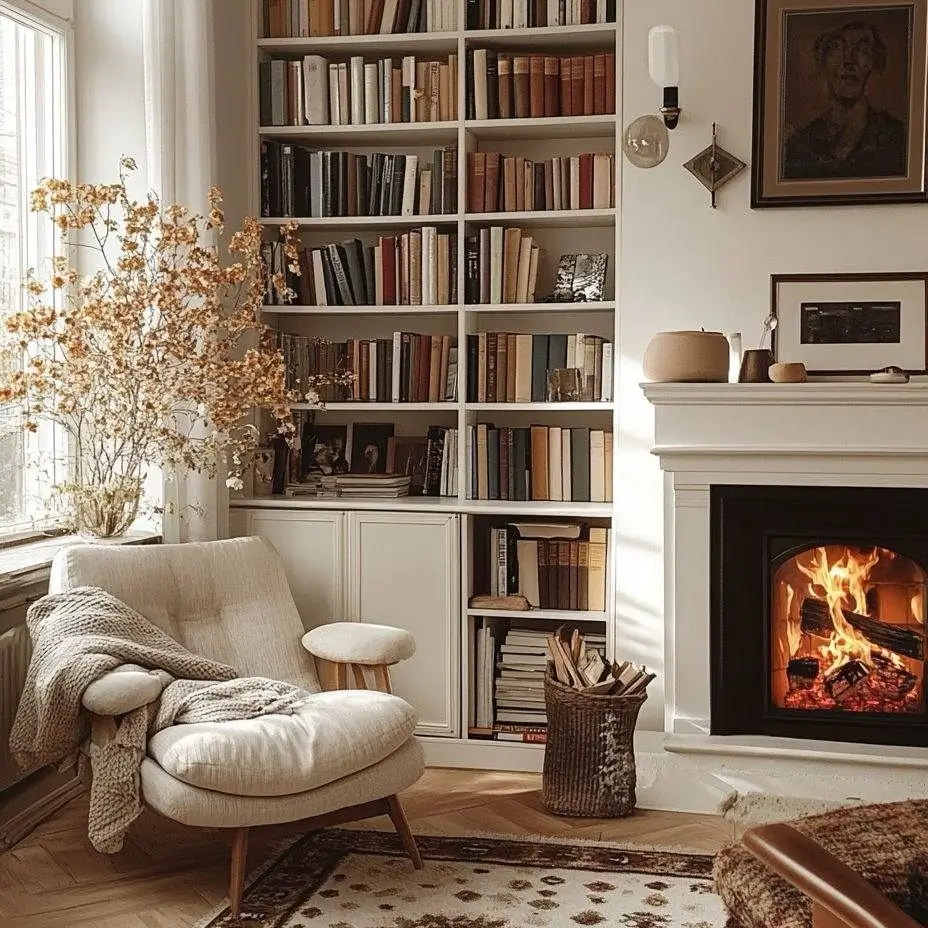
You don’t need a whole room. You need a corner.
There’s a reason why nooks feel so cozy. Environmental psychologists call it “prospect and refuge.” It’s a built in human preference for spaces that feel partially enclosed. A corner with a chair and a lamp feels safer and more comfortable than sitting in the middle of a large open room. It gives you a sense of being nestled in somewhere.
Creating a reading nook in your living room takes three things:
One armchair. One lamp. One small side table.
That’s it. Put the chair at an angle in a corner. Put the lamp directly next to it so the light falls over your shoulder. Add a small table for a drink and a book. You’ve created a defined zone inside the larger room, and that zone will immediately feel like the coziest spot in the house.
A bookshelf placed behind the chair makes the corner feel even more anchored. If you don’t have a bookshelf, a large plant or a curtain panel can create the same sense of a backdrop.
This works especially well in small apartments. In a small cozy living room, creating zones actually makes the space feel larger, not smaller. Each defined area has a purpose. The room stops feeling like one big open box.
Budget version: A secondhand armchair from Facebook Marketplace costs $0 to $80. A clip on reading lamp costs about $18. Total: under $100 for a complete cozy corner.
Quick win: Move your most comfortable chair to a corner today. Add a lamp. See if it changes how often you actually sit there.
7. Hang Your Curtains at Ceiling Height (Not Window Height)

This is probably the fastest free upgrade you can make to your living room.
Most people hang curtains right at the top of the window frame. It looks fine. But it makes the ceiling feel low. It makes the window feel small. And it makes the whole room feel shorter and more cramped than it actually is.
The fix is to hang the curtain rod 4 to 6 inches above the window frame. Better yet, hang it as close to the ceiling as possible. Then let the curtains fall all the way to the floor.
This one change makes the room feel taller. It makes the window look bigger. It creates a sense of grandeur that you usually only see in nicely designed spaces. And it costs nothing if you already have curtains and a drill.
For new curtains, the fabric makes a big difference in warmth. Velvet curtains are the top choice for a cozy, rich look. They also block light well and help with temperature insulation in winter. Linen curtains are lighter and more casual but still add softness. Blackout thermal curtains are practical and keep rooms noticeably warmer in cold months.
For color, matching your curtains to your walls creates a seamless, enveloping look. That’s the cozy choice. Going with contrast adds drama but can feel busier.
IKEA’s SANELA (velvet) and DYTAG (linen blend) curtains are both widely recommended in budget decor circles and cost $20 to $60 per panel.
Quick win: Measure the height from your window top to your ceiling. Move your curtain rod up. The whole room shifts.
8. Style Your Coffee Table Like a Designer Would

An empty coffee table looks unfinished. A cluttered coffee table looks chaotic. A styled one makes the whole room look intentional.
The secret that interior stylists use is simple. It’s called the tray trick.
Put a tray on your coffee table. Then arrange everything inside the tray. The tray acts as a frame. It groups loose items together and makes random objects look like they belong together. It instantly looks deliberate.
Inside the tray, use the rule of odd numbers. Three items or five items always look better than two or four. We’re wired to find odd groupings more interesting.
Vary your heights. Put something tall in the group, like a candle or a small vase with dried stems. Put something medium, like a small stack of books. Put something low and wide, like a decorative bowl or a coaster set. The contrast in heights creates visual interest.
For warm living room decor, the best coffee table items are:
Two or three pillar candles. A small plant or succulent. A bowl with a few stones, pine cones, or decorative objects. One or two coffee table books about topics you actually care about.
And here’s the part most people forget. Leave 30 to 40 percent of the table surface completely clear. You still need to put a drink down.
Quick win: A marble tray costs about $22. Two pillar candles run about $12. A small succulent is around $6. That’s under $40 for a completely styled coffee table.
9. Replace Cold Surfaces With Warm, Natural Materials

Glass. Chrome. Plastic. These materials are everywhere in modern homes.
And they make rooms feel cold. They reflect light harshly. They look sleek but impersonal. When a room has too many of them, it starts to feel like a showroom instead of a home.
The solution is to swap them out, one at a time, for natural materials. Wood. Rattan. Linen. Ceramic. Stone.
You don’t need to replace your furniture. Small swaps make a big difference. Replace a glass vase with a ceramic one. Swap metal picture frames for wooden ones. Add a woven basket instead of a plastic storage bin. Replace a chrome lamp base with a rattan or wood one.
The Japanese concept of wabi sabi is useful here. It’s the idea that imperfect, worn, natural things are beautiful. A slightly rough ceramic bowl. A wooden tray with grain visible. A linen pillow that wrinkles. These things add warmth precisely because they look real and human, not factory made.
Rattan and cane furniture have seen steady sales growth for several years running because consumers are actively moving away from cold, metal based modern furniture. A rattan side table, a woven pendant lamp shade, or a cane accent chair can shift the whole material palette of a room.
Quick win: Walk through your living room and count the chrome or glass objects. Replace just two of them with something wooden or ceramic. The difference will be visible immediately.
10. Get the Fireplace Feel Without Having a Fireplace

Nothing makes a room feel cozier than a real fire.
But most people don’t have a fireplace. And most renters definitely can’t install one.
Here are four options that actually work:
Electric fireplaces have gotten genuinely good. Modern freestanding units and TV stand units have realistic flame effects with adjustable color and intensity. They also produce real heat. Prices range from $100 to $400 and installation means plugging it in.
Bio ethanol fireplaces use real, clean burning ethanol fuel and produce an actual flame. No chimney needed. No venting needed. Tabletop models start at around $80 to $120. They don’t produce as much heat as a real fireplace but the visual and psychological effect is real.
Candle clusters are the lowest cost option. Group 5 to 7 pillar candles of different heights together on a fireplace hearth or against a wall. Light them all at once and you have a warm, glowing focal point. This is a core hygge living room design practice, specifically referenced in Meik Wiking’s bestselling book “The Little Book of Hygge.”
Fireplace screensavers on YouTube or Apple TV are free and surprisingly effective. Put them on a large screen TV at night. It sounds ridiculous until you try it.
Finally, style the shelf above your TV or a blank wall section as a “mantel.” Add candles, a framed piece of art, and a plant. It creates the visual architecture of a fireplace area even without the fireplace.
Quick win: Search YouTube for “4K fireplace” tonight. Put it on your TV with the overhead lights off. You’ll keep it running.
11. Build a Gallery Wall That Tells Your Story

A gallery wall does something that no bought decor item can do.
It makes the room feel like yours.
Store bought art is fine. But a wall of framed photos from your actual life, prints of things you love, and objects that mean something to you creates a room that has genuine personality. People walk in and immediately understand something about who lives there.
The reason most people avoid gallery walls is that they’re afraid of getting the layout wrong. Here’s the trick: the paper template method. Cut pieces of newspaper or printer paper to the exact size of each frame. Tape them to the wall in your planned arrangement. Step back and look. Adjust until you like it. Then hammer nails through the paper. Pull the paper off. Hang the frames.
You will not make a mistake. No holes in the wrong places.
For a cozy, warm gallery wall, mix frame styles rather than using a perfectly matched set. A wood frame next to a thin black frame next to a thicker gold frame looks eclectic and layered. A perfectly matched set of identical frames looks corporate.
What to include: your own photos, art prints in warm tones, small mirrors to bounce light, dried botanical fronds in simple frames, postcards from places you’ve been.
For free or cheap art: Unsplash has thousands of beautiful, printable photos at no cost. Canva has print ready poster templates. Etsy has printable wall art downloads from $1 to $5.
Quick win: Print three photos from your phone at a pharmacy for under $5. Buy three frames from a thrift store for $3 to $5 each. Start your wall this weekend.
12. Declutter Before You Add Anything Else

Here is the part most people skip.
You can add every item on this list to your living room. But if the room is cluttered, none of it will work. Clutter cancels cozy.
Research from Princeton’s Neuroscience Institute found that visual clutter competes for your attention and increases cortisol levels. Cortisol is your stress hormone. A cluttered room literally stresses you out, even if you don’t consciously notice it.
The paradox is real. Adding cozy things to a cluttered room makes it feel worse. More stuff, more chaos. The cozy items get lost in the noise.
Before you buy anything new, do this:
Apply one rule to every surface in your living room. Keep one surface completely clear. Choose one coffee table, one shelf, or one side table. Whatever it is, nothing lives on it permanently. That one clear surface will make the whole room breathe.
For the stuff you need but don’t want to see, use hidden storage that doubles as decor. A storage ottoman holds blankets and remotes and looks like furniture. A large woven basket holds kids toys or extra pillows. A storage bench at the entry holds shoes.
Marie Kondo’s “spark joy” test is genuinely useful here. Pick up each decorative object in your room. Ask yourself honestly: does this add anything? If the answer is no or you’re not sure, box it up. Put the box in a closet. If you don’t miss any of it in two weeks, donate it.
Quick win: Set a timer for 15 minutes. Remove everything from one surface. Only put back what you actually want there. Stop when the timer goes off.
13. Use Mirrors to Make Your Room Feel Bigger and Brighter

A mirror in the right spot makes a room feel larger, brighter, and warmer all at once.
Here’s how it works. Mirrors reflect light. When you place a mirror across from a window, it bounces natural light back into the room. The room feels like it has twice the light. At night, placing a mirror near warm lamps has the same effect with artificial light.
Placement rules: Place mirrors across from a window to double the natural light. Place mirrors near lamps to amplify warm light at night. Never place a mirror directly across from a cluttered area. It doubles the clutter too.
For cozy rooms, the frame style matters as much as the mirror itself. Arch mirrors (tall, rounded top) are one of the most popular home decor items for two years running and remain a top search in 2026. Gold toned frames, rattan frames, and ornate vintage frames all add warmth. Thin chrome frames look cold.
Leaning a large floor mirror against a wall is one of the best things you can do in a small living room. It creates depth. It reflects the room back at you, making it look twice as large. And it looks casual and intentional at the same time.
A simple trick: place a cluster of candles in front of a mirror. The reflection doubles the candlelight. The effect is genuinely beautiful and costs nothing extra.
Quick win: IKEA’s LINDBYN and NISSEDAL mirrors are both under $80 and frequently cited in budget decor guides as high quality options.
14. Choose a Sofa That Actually Invites You to Sit Down

Your sofa is the most used piece of furniture in your home. It deserves some thought.
The most important measurement for a cozy sofa is seat depth. A seat depth of 22 to 24 inches is the sweet spot for a loungy, sink in feeling. Shallower than that and you’re sitting upright like you’re in an office. Deeper than 26 inches and shorter people struggle to reach the back cushions.
Cushion fill matters too. Down and feather fill feels luxurious and soft but needs fluffing. High density foam is firmer and more supportive but can feel stiff over time. A hybrid fill, foam core wrapped in down, gives you both. For coziness, lean toward softer fills.
For materials, bouclé fabric sofas have seen consistent growth in popularity from 2022 straight through to 2026. The loopy, textured weave looks warm and soft and is more durable than it looks. Velvet sofas are also a top choice for warm living room decor. Both are significantly cozier than cold leather.
If you can’t replace your sofa right now, here’s what you can do instead. Buy a sofa slipcover. Good ones start at $60 and go up to $150. They transform the look of an aging couch completely. Pair the new slipcover with a throw blanket draped over one arm and three new cushions in mixed textures. It’s a different sofa for under $200.
Quick win: If your current sofa has foam cushions that have flattened, replace just the cushion inserts. New foam inserts cost $20 to $50 each and make an old sofa feel brand new.
15. Use Scent to Change How the Room Feels
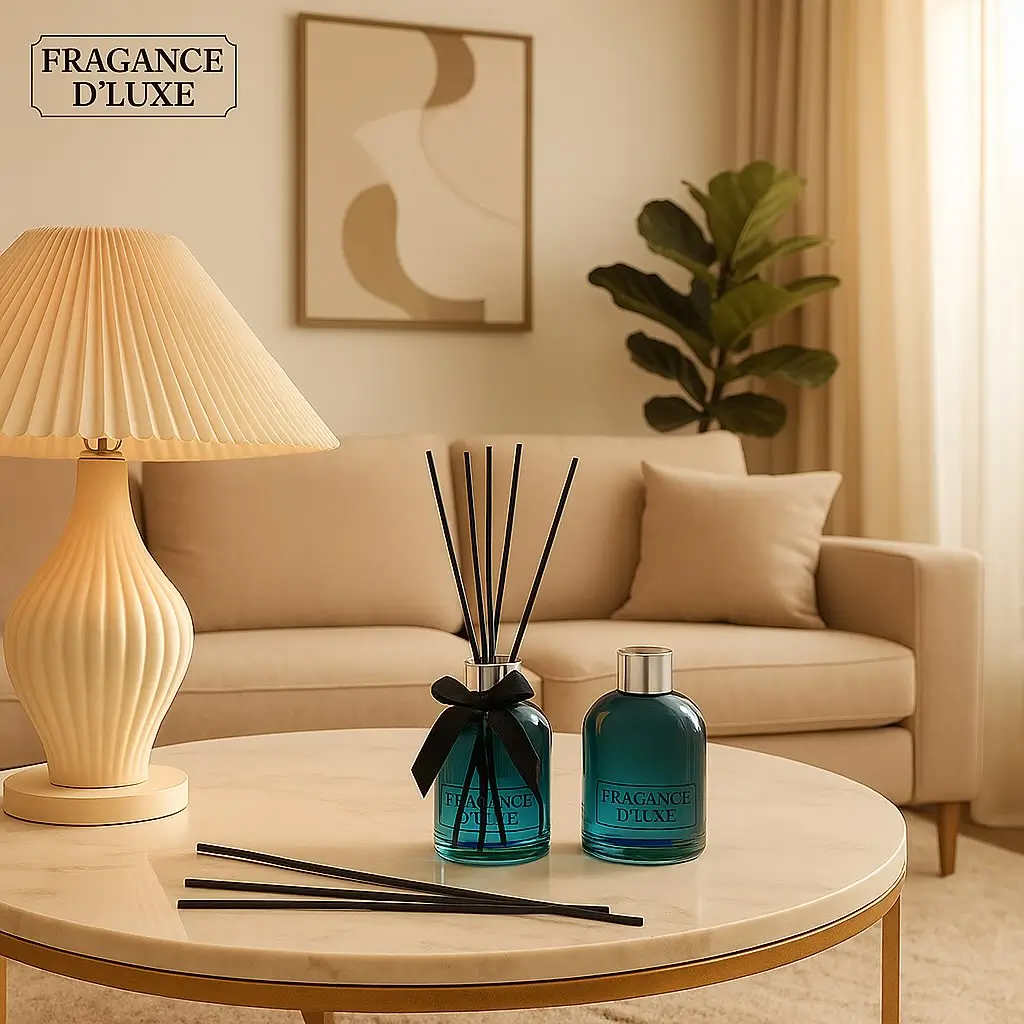
Most people forget about scent completely.
That’s a mistake. Smell is the sense most directly connected to emotional memory and comfort. Research in neuroscience confirms that smell bypasses the rational brain and goes straight to the emotional center. A room that smells good feels safe, familiar, and warm before you’ve even looked around.
For a cozy living room, warm scent profiles work best. Think vanilla, sandalwood, cedar, amber, cinnamon, and firewood. These scents are associated with warmth, safety, and home in most people’s emotional memory. They signal “comfortable and safe” on a level that isn’t even conscious.
Your options:
Soy candles are the best all around choice. They burn cleaner than paraffin wax, producing less soot and fewer chemicals. They also last longer. A good soy candle burns for 40 to 50 hours. A paraffin candle at the same size burns for 20 to 30 hours.
Reed diffusers provide a constant low level scent with no flame. Good for homes with kids or pets.
Wax melts are cheap and let you change scents often without committing to a large candle.
Essential oil diffusers give you total control over intensity and scent combinations.
One rule: one scent source per room. More than one creates competition and the result smells strange rather than cozy.
The global home fragrance market passed $9 billion in 2024 and is still growing. People want their homes to smell good. The products are widely available, well made, and affordable.
Quick win: One soy candle in a warm scent (cedar, amber, or vanilla) under $20 will change the feel of your living room the moment you light it.
16. Arrange Your Furniture for People, Not Just the TV

Most living rooms are arranged for one purpose: watching TV.
Everything faces the screen. The sofa points at it. The chairs point at it. If someone wants to have a real conversation, they have to twist sideways and talk to the side of someone’s head.
This layout makes a room passive. It says: we don’t talk here, we watch. That’s not cozy. That’s a cinema.
The more inviting arrangement is called the conversation layout. Furniture faces inward, toward the center of the room and toward each other. If you have a sofa and two chairs, angle the chairs slightly toward the sofa rather than pointing them straight at the TV. Add a coffee table in the center where everyone can reach it.
If you want to keep the TV but make the room cozier, create two zones. One zone faces the TV. The other zone, maybe just an armchair and a side table in a corner, faces away from it and becomes a reading or conversation area. Having two zones in one room makes the space feel larger and more purposeful.
The floating furniture technique is important here. Most people push all their furniture against the walls. Interior designers almost never do this. Pulling your sofa 6 to 12 inches away from the wall creates depth, makes the room feel larger, and creates a more intimate grouping in the center.
For measurements: keep 18 inches between your sofa and coffee table so you can reach your drink. Keep 36 inches of walkway clear for easy movement.
Quick win: Pull your sofa one foot away from the wall. Just try it for a week. Most people never push it back.
17. Add Personal Touches That No Store Can Sell You

This is the last step. And it’s the most important one.
There’s a difference between a decorated room and a lived in room. Decorated rooms look good in photos. Lived in rooms feel good to be in. The difference is almost always the personal objects.
A room full of beautiful things from a store can look perfect and feel completely empty. A room with a few meaningful objects, a photo from a trip you took, a bowl your grandmother made, three books you’ve actually read, feels immediately human. You walk in and feel like someone lives there.
The editing principle is everything. Don’t display 30 personal objects. Display 3 to 5. Pick the ones that actually mean something. Style them intentionally so they look placed rather than piled up.
Here’s how to style a personal object so it looks intentional. Give it space. Put it on a cleared surface where it can be seen. Group it with one or two other objects at different heights. Add a small plant or candle nearby. Step back. If your eye goes straight to the meaningful object, it’s working.
The “curated shelfie,” a styled bookshelf or shelf arrangement that mixes personal items with decor, is one of the most saved and shared home content formats on Instagram and TikTok going into 2026. People respond to rooms that have a story. Yours does too. You just have to let it show.
Quick win: Take one meaningful object that’s been in a box or a drawer. Give it a proper place in your living room. Style it simply. See how differently the room feels.
Conclusion
You don’t need to renovate anything. You don’t need a big budget. You don’t need to hire anyone.
The rooms that feel genuinely cozy all have three things in common. Warm, layered light. Soft, textured materials. And real personal objects that make the space feel like it belongs to someone.
Everything else on this list builds on those three foundations.
Pick one idea from this article. Just one. Do it this weekend. Then come back and pick another.
Small changes stack up. Two months from now, you’ll walk into your living room and realize it feels completely different. Not because you redid everything at once. Because you made 17 small, intentional decisions.
These cozy living room ideas work because they’re based on how people actually feel in spaces, not just how spaces look in photos. Start with one. Build from there. Your living room can become the place everyone wants to be. Including you.