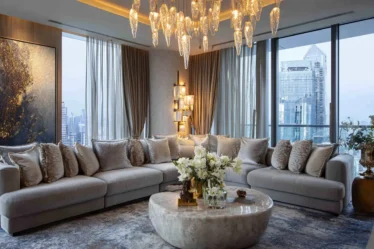
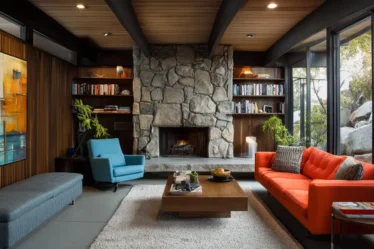
Want a calmer living room? Start by removing things, not adding them. Declutter first. Pick neutral colors. Choose one good sofa. Hide your storage. Clear your floors. That’s the whole game.
Your living room should be the most relaxing space in your home. But for most people, it’s the most stressful.
Too many throw pillows. Shelves packed with stuff nobody looks at. Furniture shoved into every corner. You walk in and your brain immediately feels tired.
You’ve seen those clean, calm living rooms on Instagram or Pinterest. And you wonder: how do people actually live like that? Do they just… own nothing?
No. They just own less of the wrong things.
This guide gives you 18 real, practical minimalist living room ideas you can actually use in 2026. No expensive renovations. No hiring a designer. Just clear steps that work whether you rent or own.
Let’s get into it.
1. What Actually Makes a Living Room Minimalist?

Most people think minimalism means empty rooms and white walls. That’s not it.
Minimalism means you keep what works and remove what doesn’t. Every item in the room has a reason to be there.
There are three things that make a living room feel minimalist. Function — everything you own should actually get used. Space — empty areas are not wasted, they give your eyes a place to rest. And visual calm — when you walk in, nothing is fighting for your attention.
Here’s why this matters for your brain. A study from Princeton Neuroscience found that visual clutter competes for your attention. When there’s too much to look at, your brain keeps scanning. It never settles. That’s why cluttered rooms make people feel anxious without knowing why.
Marie Kondo built her whole career on one idea: keep only what brings you joy. It sounds simple. It is simple. But it takes practice.
A minimalist living room isn’t cold or boring. Done right, it feels warm, intentional, and genuinely restful.
Start here: Walk into your living room right now. What’s the first thing your eye goes to? If it’s clutter, not a focal point, that’s what you’re solving.
2. Declutter Before You Buy a Single Thing

This is the most important rule in this entire article. Do not buy anything new until you remove things first.
Most people do it backwards. They buy new storage bins, new shelves, new decorative pieces. Then they wonder why the room still feels full. You can’t decorate your way out of too much stuff.
The average American home contains around 300,000 items. Your living room holds more than you think.
Joshua Becker, who runs Becoming Minimalist and wrote The More of Less, gives simple advice here. Start with the most visible surfaces, not with hidden drawers or closets. The coffee table. The shelves. The TV area. These are what you see every day. These are what stress you out.
Here’s a rule that works: the flat surface rule. Nothing should permanently live on a flat surface. If it’s always sitting on a table or shelf, it’s either decorative or clutter. Decide which.
Sort everything into four groups. Keep. Donate. Store. Discard. Don’t do this in your head. Use actual boxes or bags. Physical sorting is faster and more honest than mental sorting.
Action step: Remove everything from your coffee table. Wait seven days. Only put back what you actually reached for.
3. Pick a Neutral Color With One Accent

Color is free. It costs nothing to repaint. And the right color can make a room feel twice as big.
Most minimalist rooms use warm neutrals as the base. Think soft white, warm gray, beige, or greige (a mix of gray and beige). These colors calm the eye. They don’t compete with your furniture or decor.
For 2026, the design world is leaning into warm whites paired with earthy tones. Sage green and terracotta are both popular accent colors right now. Sherwin-Williams has highlighted warm neutrals and earth tones as dominant in their recent color direction reports.
Here’s a simple rule called the 60-30-10 rule. Your main color covers about 60% of the room, usually the walls. Your secondary color covers 30%, usually the sofa or rug. Your accent color covers 10%, usually pillows or a plant pot or a single piece of art.
The mistake most people make is using three or four accent colors at once. A room with red pillows, blue vases, yellow curtains, and green plants isn’t colorful and fun. It’s visually exhausting.
Pick one accent. Stick with it everywhere.
Action step: Look up Agreeable Gray by Sherwin-Williams. It works with almost any accent color and suits almost any room size.
4. Buy One Great Sofa and Stop There

Your sofa is the most important piece in your living room. Everything else should support it, not compete with it.
One good sofa beats three cheap ones. Every time.
For minimalist rooms, look for these qualities. Low profile, meaning it sits closer to the ground. Clean lines, meaning no fussy carved wood or busy fabric. Solid color, meaning no patterns that fight with everything else in the room.
Linen-upholstered sofas are trending in 2026 design content from Architectural Digest and House Beautiful. They look clean, they age well, and they feel warm without being heavy.
You don’t need to spend a lot. IKEA’s APPLARYD is a clean, low-profile option under $900. Article’s Timber sofa is a step up in quality without going luxury price.
If you already have a sofa and can’t replace it right now, do this one thing. Remove every pillow except two. Swap your existing throw for a single neutral one, like cream or warm gray. The sofa will look completely different in under five minutes.
Action step: Take every decorative pillow off your sofa. Only put back two. Notice how much calmer it looks.
5. Remove at Least One Piece of Furniture From the Room

This one feels scary. It isn’t.
Most living rooms have 20 to 30% more furniture than they need. The extra pieces were added one at a time, so nobody noticed the room getting crowded.
Here’s how to find the piece that should go. Walk through your living room normally. Which piece of furniture do you have to step around or squeeze past? That’s the one.
Empty space is not wasted space. In interior design, it’s called negative space. It’s a deliberate choice. It gives the room room to breathe. Without it, even nice furniture looks messy.
Try this: move one piece out of the room for seven days. Just put it in another room or a storage area. Don’t get rid of it yet. Live without it for a week. If you didn’t notice it was gone, it was taking up space it didn’t earn.
A lot of people remove the accent chair that nobody actually sits in. Replace that corner with one tall plant in a simple pot. Same footprint. Much better result.
Action step: Identify the one piece of furniture you work around. Move it out for seven days and see how the room feels.
6. Choose Low-Profile Furniture to Open Up the Space

This trick works in any room. It costs nothing if you’re already buying furniture.
Low-profile furniture sits closer to the ground. It exposes more wall space above it. That extra visible wall makes the ceiling feel higher and the room feel larger. It’s not an illusion exactly. It’s just using space better.
Japanese design has influenced this approach for decades. The wabi-sabi philosophy, which values simplicity and natural materials, has shaped a lot of what we now call modern minimalism. Publications like Dezeen have tracked how Japanese minimalist furniture has moved into mainstream Western design.
Look for furniture with legs you can see underneath. Sofas, chairs, and sideboards that have visible legs let light pass under them. That gap between the floor and the furniture keeps the room from feeling heavy.
A coffee table at 14 to 16 inches high looks and feels different from one at 18 to 20 inches. The lower one keeps the eye moving across the room instead of stopping at the table.
Brands to check out: Muji, HAY, and IKEA’s VITTSJO line all offer clean, low-profile pieces at different price points.
Action step: Look at your current furniture. If anything has a skirt that reaches the floor, replacing it with a legged version is one of the fastest ways to open up a room.
7. Let Natural Light Work for You

Natural light is the best decor you’re not paying for. And most people block it.
Heavy curtains, furniture in front of windows, and dirty glass all cut the light in your room. The fix is usually simple.
Start with your window coverings. Swap thick, heavy curtains for linen panels, sheer fabric, or roller blinds. These let light in while still giving you privacy when you need it. White or off-white is the safest choice because it adds light even when the blinds are closed.
Then check what’s in front of your windows. A lot of people put furniture there without thinking. Move it. Nothing should block a window.
The mirror trick works. Place a mirror directly across from your main window. It reflects the light back into the room. A room with one large mirror can feel noticeably brighter without changing any light fixtures.
Research from the World Green Building Council shows that natural light improves both mood and focus. This isn’t just about looks. It’s about how you feel in the room every day.
Action step: Right now, move anything that sits in front of a window. Even six inches of extra window exposure makes a difference.
8. Use Storage That Hides Things, Not Displays Them

Here’s a truth that most decorating articles skip: not everything you own is beautiful. And that’s fine. It just needs to be hidden.
Minimalist storage isn’t about owning less, although that helps. It’s about making sure the things you do own have a home out of sight.
Ottomans with storage inside are one of the best purchases for a minimalist living room. You get a surface, extra seating, and hidden storage all in one piece.
Media consoles with closed doors are far better for minimalism than open shelving units. The IKEA BESTA system is the go-to recommendation from almost every budget interior design space. Closed doors. Clean front. Everything hidden.
If you have open shelves, use uniform boxes or baskets. Mixed containers create visual noise even when the items inside are organized. The Container Store and IKEA both carry plain, matching storage boxes that work well.
The rule is simple. If it’s not beautiful enough to be displayed, it should be stored. Cords, remotes, charging cables, spare batteries, all of it goes in a drawer or a box with a lid.
Action step: Count how many things are visible in your living room that aren’t decorative. Each one needs a drawer, box, or cabinet.
9. Limit Every Surface to Three Objects

You don’t need to clear your surfaces completely. You just need to be strict about what stays.
The rule of three is one of the most practical ideas in interior styling. Interior designers including Emily Henderson and Bobby Berk both reference it regularly. On any given surface, keep three objects maximum. Vary the height. Vary the texture. Keep the color family consistent.
A good example for a coffee table: one tall candle, one small plant, and one low decorative bowl. That’s it. Different heights, different textures, calm and complete.
Now picture the same table with eight objects. A remote. Three candles. Two books. A coaster. A small figurine. Your eye doesn’t know where to go. That’s the problem.
The other tip here is rotation. You don’t have to get rid of your extra decor pieces. Store them and swap them out seasonally. This way your room never feels stale, but it also never feels crowded.
Action step: Go to your busiest surface right now. Remove everything. Put back only three items using the height, texture, and color rule.
10. Get One Large Plant Instead of Many Small Ones

Five small plants scattered around a room creates visual noise. One large plant creates a statement.
A fiddle leaf fig, monstera, olive tree, or rubber plant in the right corner of a room does more for the space than almost any piece of decor you could buy. It adds organic texture. It adds height. And it brings life into the room without adding clutter.
The pot matters as much as the plant. Avoid patterned or colorful pots. Go for plain terracotta, matte white, or matte black. Oversized terracotta pots are a consistent trend in 2026 minimalist room styling.
If you have a reputation for killing plants, start with a pothos or a ZZ plant. Both are extremely low maintenance, grow large over time, and tolerate low light and occasional neglect.
You don’t need to spend much. A large pothos in a simple nursery pot can be repotted into a plain terracotta pot for under $30 total. The visual impact is immediate.
Action step: If you have several small plants spread around the room, consolidate. Pick the best one, move it to the most visible corner, and store or move the others.
11. Mount Your TV and Remove the TV Stand

This is one of the highest-impact changes you can make in a living room, and it often costs less than $50.
A TV stand takes up floor space, collects clutter on its surface, and adds visual weight at the bottom of the room. Wall-mounting your TV removes all of that at once.
The Samsung Frame TV has been popular in minimalist design circles since 2021 and continues to be referenced in design content through 2026. When it’s not playing video, it displays artwork. It looks like a framed print on the wall, not a screen.
You don’t need a Frame TV to get this right. Any wall-mounted TV with clean cord management looks dramatically better than a TV on a stand.
For cords, use a cable raceway kit. These are plastic channels that stick to the wall and hide all your cables in a clean line. They cost $15 to $40 on Amazon and take about 20 minutes to install.
Once the TV is mounted, where does the stand go? Out of the room. That recovered floor space will surprise you.
Action step: Search “cable raceway kit” on Amazon. It’s the cheapest, fastest way to start this project this weekend.
12. Use One Large Rug Instead of Several Small Ones
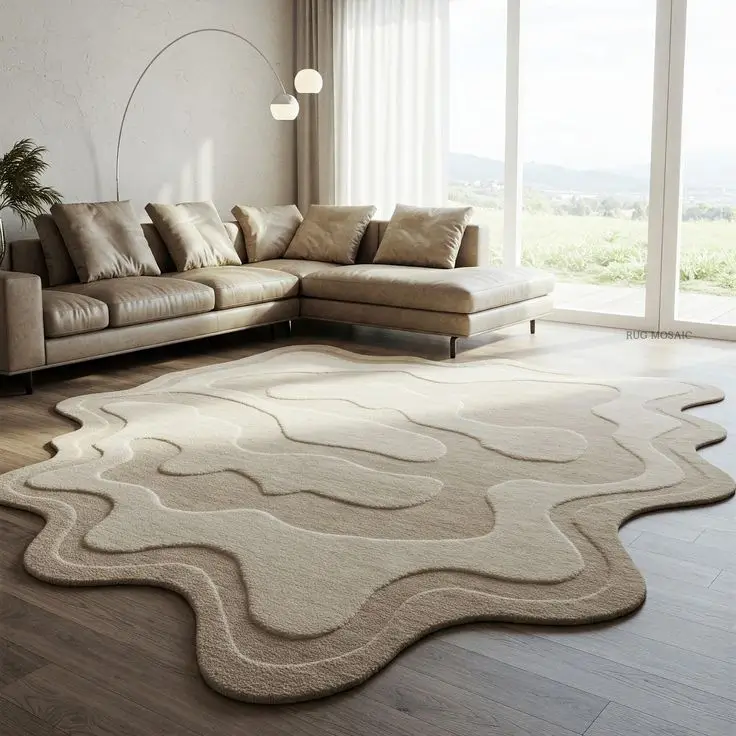
A rug that’s too small is one of the most common mistakes in living room design. And it’s an easy fix.
A small rug floats in the middle of the room. It doesn’t anchor anything. It makes the furniture look disconnected and the room look unfinished. Interior designers consistently recommend that for a standard living room, 8×10 feet is the minimum rug size.
The rule is this: at least the front legs of every main piece of furniture should sit on the rug. The sofa, the chairs, the coffee table. When they’re all connected by the rug, the room feels pulled together.
For minimalist rooms, choose texture over pattern. A jute rug, a low-pile wool rug, or a plain cotton weave in warm white or light gray works in almost any minimalist space.
Rug layering, which was very popular a few years ago, works against minimalism. It adds visual noise and competing textures. Single, well-sized rugs are what design publications like Houzz and Architectural Digest are showing for 2026.
Ruggable makes washable rugs in clean, minimal patterns and solid colors. Practical and easy to maintain.
Action step: Measure your living room. If your rug is smaller than 8×10 feet, it’s probably too small for the space.
13. Hang One Large Piece of Art Instead of a Gallery Wall

Gallery walls had their moment. For minimalist rooms, one large piece wins.
A single piece of art, hung at eye level, with empty wall space around it, creates a real focal point. A gallery wall of 12 small mixed frames creates visual noise that pulls the room in twelve directions at once.
Size matters a lot here. A 24×36 inch print has real presence on a wall. Six small 8×10 frames do not, even arranged carefully.
For minimalist art, look for abstract work, simple line drawings, or clean black-and-white photography. These all work well with neutral color palettes and don’t fight with your furniture.
You don’t need to spend a lot. Society6, Desenio, and Minted all offer clean minimalist prints starting at $20 to $30. You can also download high-resolution images from Unsplash for free and have them printed large format at a local print shop or FedEx.
Large-format art is showing up consistently in 2026 interior content from Elle Decor and Domino as a move away from crowded gallery arrangements.
Action step: Take down every piece of wall art in your living room. Pick one. The best one. Hang it centered, at eye level, and leave everything else off the wall for two weeks.
14. Deal With Your Cords Once and For All

Visible cords are one of the fastest ways to make a clean room look messy. And they’re completely fixable.
Look at your living room right now. Count every cord you can see. Power strips, TV cables, lamp cords, charging cables, speaker wires. Each one adds noise without adding anything.
The first move is to go wireless where you can. A Bluetooth speaker replaces one cord and a device. A charging pad on a side table replaces a tangle of charging cables. Wireless home systems are better and cheaper in 2026 than they’ve ever been.
For cords that must stay, use management tools. Cord clips stick to your baseboard and guide cables flat against the wall. Cable sleeves bundle multiple cords into one clean tube. Cable raceways cover the whole run from outlet to device. Amazon Basics makes reliable versions of all of these for under $20.
Create a tech drawer. One drawer in a side table or media console. Every remote, spare cable, charging brick, and tech accessory lives there. The drawer closes. The surface is clear.
Cable management is one of the most requested topics in active home design communities on Reddit in 2026.
Action step: Take a photo of your living room right now. Look at the photo and circle every cord you can see. That list is your to-do list.
15. Follow One Simple Rule Going Forward: One In, One Out

Getting to a minimalist living room is the first challenge. Keeping it that way is the second, and honestly the harder one.
The one in, one out rule is simple. Every time a new item comes into the room, an existing item leaves. New throw pillow? The old one gets donated before the new one goes on the sofa. New candle? An old one goes. New book? An old one moves to a shelf in another room or goes to a donation box.
This isn’t about being rigid. It’s about preventing the slow drift back toward clutter that happens to every minimalist room over time.
Joshua Becker and The Minimalists both make the same point: minimalism is not a destination you arrive at. It’s a practice you maintain. A habit. The room doesn’t stay minimal because you cleaned it once. It stays minimal because you keep making small decisions.
Build in a seasonal review, twice a year is enough. Go through the room and ask: is everything here still earning its place?
Action step: Next time you buy something for your living room, decide before you buy what you’ll remove to make space for it.
16. Add Texture to Keep the Room From Feeling Cold
This is the part where people worry about minimalism looking sterile. It doesn’t have to.
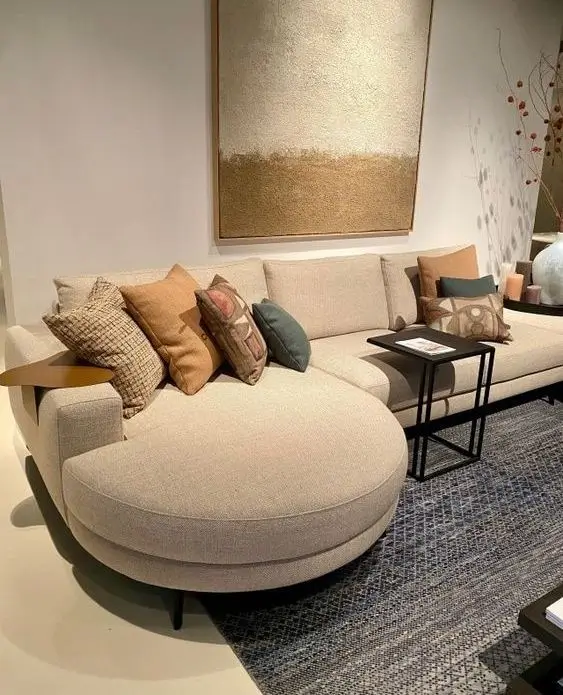
The trick is tonal texture layering. Instead of mixing bold colors and patterns, you mix textures within the same color family.
Picture this: a cream linen sofa, a white cotton throw, a natural jute rug, and a light oak coffee table. Every item is a different texture. Every item is in the same warm neutral color family. The result is rich and interesting without being visually busy. Zero clutter. Maximum warmth.
Safe textures for minimalist rooms include linen, cotton, smooth wood, natural stone, jute, and wool. These are all natural materials. They feel grounded and calm next to each other.
Avoid shiny metallics, busy woven patterns, and mixed bold colors. These add noise instead of warmth.
Tonal texture layering is highlighted as a key interior trend for 2025 and 2026 in Houzz’s annual design reports.
H&M Home and Zara Home both carry minimalist textured pieces at accessible prices. You don’t need to spend much to do this well.
Action step: Look at your sofa. If every soft item on it is the same texture and material, add one item in a different material, same color family. A linen throw on a cotton sofa, for example.
17. Rethink Your Shelves: Show Less, Store More

Open shelves are beautiful in design photos. In real life, they collect clutter faster than almost any other surface.
The problem isn’t the shelves. It’s what goes on them.
Interior designer Shea McGee of Studio McGee is well known for a simple shelf styling approach: vary height, leave breathing room, and be ruthless about what earns a spot. Her work has shaped how a lot of people think about shelf styling in the last several years.
Here’s a rule that works: the one-third rule. On any open shelf, one third holds books (stacked or standing). One third holds decorative objects. One third stays empty. That empty third is not wasted. It’s what makes the other two-thirds look intentional.
If something on your shelf isn’t beautiful or useful, it doesn’t belong on an open shelf. Put it in a closed cabinet, a drawer, or a box with a lid.
Floating shelves tend to look cleaner in minimalist rooms than large bookcases. Bookcases are harder to keep tidy and tend to become dumping grounds over time.
Action step: Remove everything from one shelf. Clean it. Only put back what you’d be happy to see in a photo. Leave the rest in a box for two weeks and see what you actually miss.
18. Clear Your Floor as Much as Possible
The floor is the most underrated surface in your living room. When it’s clear, the whole room looks bigger.
Most living rooms have things on the floor that don’t need to be there. Floor lamps with wide bases that take up more space than they earn. Side tables pushed into corners and used as shelving. Stacked magazines, boxes, bags, shoes, and items that never found a permanent home.
Real estate staging professionals use floor clearing as their first step when preparing a home for sale. Clean floors signal space. They signal calm. They work.
Here’s a simple test. Walk to the doorway of your living room and take a photo. Look at that photo. Every object on the floor that isn’t furniture should be questioned. Does it have a proper home? Does it need to be there? Can it be stored?
The walking path test also works. You should be able to walk in a straight line from one side of the room to the other in any direction without stepping around anything. If you can’t, something needs to move.
Action step: Set a timer for 15 minutes. Remove every non-furniture item from your living room floor. Put things away, not in a pile in another room. See how the space looks when the timer goes off.
You Don’t Have to Do All 18 Things This Weekend
Here’s the honest version: you don’t need to apply every idea in this article to get results.
Pick two or three that feel manageable right now. The declutter. The coffee table rule. The one piece of furniture you’ve been working around for months. Start there.
Minimalism in a living room isn’t about having a perfect space. It’s about building a space that actually works for you. Less visual noise. Less stress. More room to think, rest, and breathe.
The rooms that feel best are the ones where every item earned its place.
Start small. Apply one idea today, not next weekend. Then add another. The results build faster than you think.
What’s the first thing you’re going to remove? Start there.