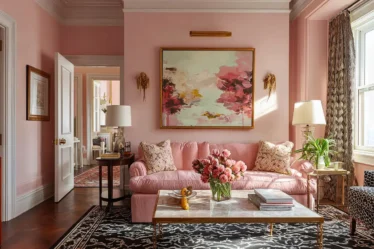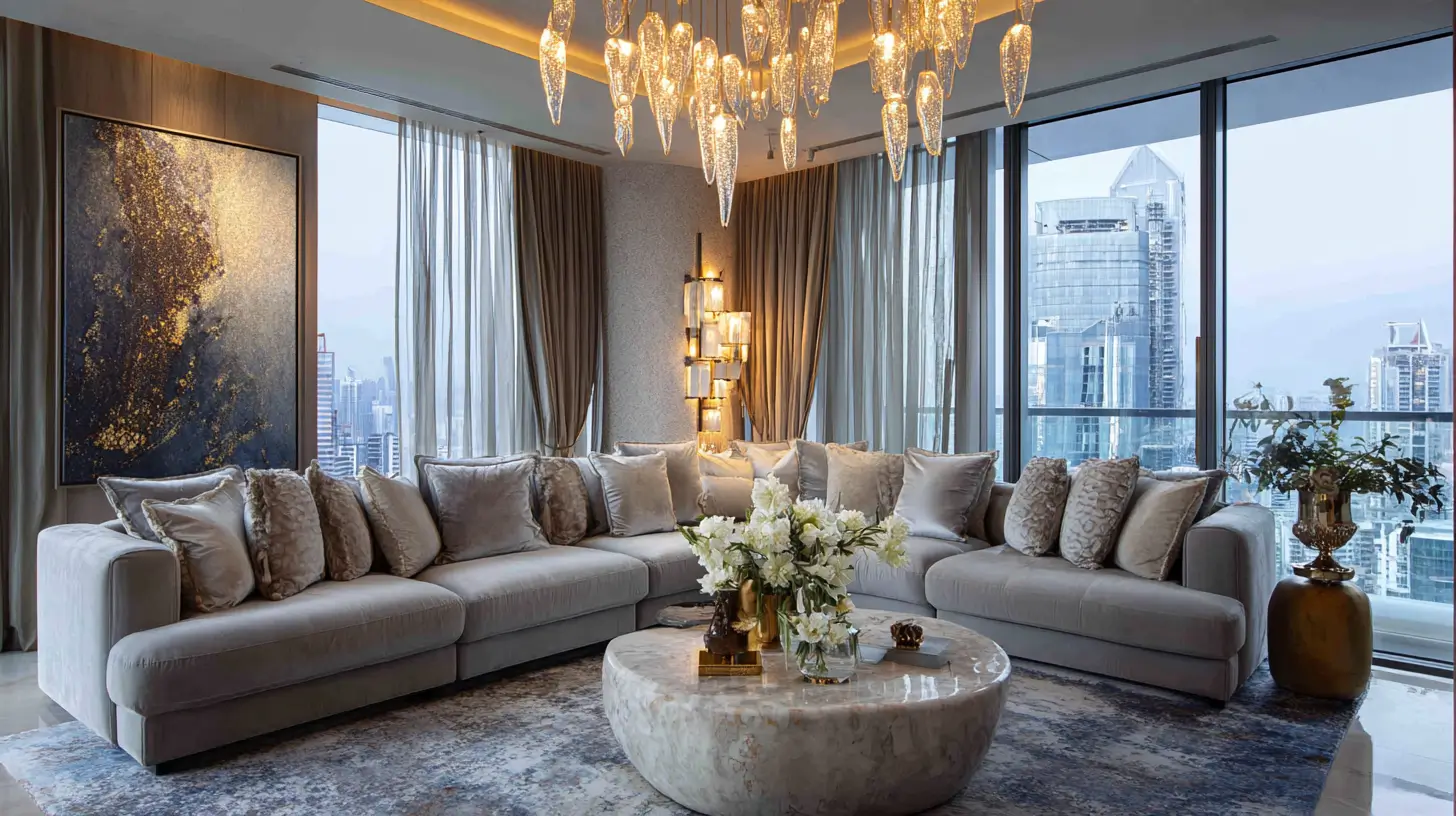
You’ve bought nice furniture. You’ve added some throw pillows. You even got a fancy rug.
But your living room still doesn’t feel like a hotel suite.
It feels like… a living room.
Here’s the truth: luxury isn’t about spending more money. It’s about making better decisions. Five-star hotels don’t accidentally look good. Every single detail is planned. The lighting. The smell. The way a throw blanket is draped over a sofa.
And you can copy every single one of those decisions at home.
This guide gives you 18 specific things you can change, fix, or add to make your living room feel like you checked into somewhere special. Some cost nothing. Some cost a little. All of them work.
Let’s get into it.
1. Build Your Color Palette Around Warm Neutrals

Most people think luxury rooms are bold and dramatic. They’re not.
Walk into the lobby of a Ritz-Carlton or a Four Seasons. What do you see? Creamy whites. Soft taupes. Warm beiges. Nothing that shouts. Everything that whispers “expensive.”
That’s on purpose.
Hotels use what designers call tonal layering. Instead of one wall color, they use three shades from the same color family. The walls might be a soft warm white. The trim might be one shade deeper. The ceiling might be the lightest of the three.
The result feels rich and layered without being busy.
The formula that works every time is called 60-30-10. Sixty percent of the room is your main color. Thirty percent is a secondary tone. Ten percent is an accent. That’s it.
For your walls in 2026, these specific colors read as expensive: Benjamin Moore Pale Oak OC-20, Sherwin-Williams Accessible Beige SW 7036, and Farrow and Ball Elephant’s Breath. Any of these three will instantly make your room feel more considered.
One more thing about paint that most people skip: finish matters as much as color. Use matte on walls. Eggshell on trim. Satin on ceilings. This difference in sheen creates subtle depth that your eye picks up even if your brain doesn’t know why.
2. Choose One Great Sofa and Build the Room Around It

Hotels don’t buy matching furniture sets. And neither should you.
The sofa is the anchor of every great living room. It sets the tone for everything else. Get this right, and the rest of the room falls into place. Get it wrong, and no amount of throw pillows will save you.
Here’s the sizing rule: your sofa should be roughly two thirds the width of the wall behind it. Too small, and it floats in the space. Too big, and the room feels stuffed.
Fabric matters a lot. The materials that read as luxury right now are bouclé (that soft, loopy textured fabric), performance velvet, and linen blends. These fabrics feel considered. They photograph well. And they age gracefully.
The leg height of your sofa affects how tall your ceiling feels. Taller legs, airier room. This is a small detail with a big visual payoff.
For brands worth spending on in 2026: Restoration Hardware, Arhaus, and Article sit at the top of the list. If your budget is tighter, West Elm’s higher tier and CB2 both deliver solid quality without the full luxury price tag.
One honest note: the RH Cloud Sofa looks incredible in photos and has been one of the most searched furniture pieces for years. It’s also very deep and very low. Make sure you actually sit in a sofa before you commit to it.
3. Use Three Types of Lighting in Every Room

This is the single biggest change you can make. And most people completely ignore it.
Overhead lighting alone makes every room look flat and harsh. It’s the number one thing that separates a living room from a hotel lounge.
Luxury hotels use three layers of light in every space. Ambient light fills the room. Task lighting serves a purpose. Accent lighting adds drama and depth.
In practice, that means: a floor lamp behind or beside the sofa, table lamps at seated eye level on side tables, and some form of accent light like a backlit shelf, a picture light, or an LED strip under a console table.
Bulb temperature is something most people have never thought about, and it changes everything. The hospitality industry uses bulbs between 2700K and 3000K. This is warm, golden light. It makes skin look good. It makes rooms feel cozy. Anything above 3500K starts to feel like a hospital.
Dimmer switches are non-negotiable. Every lamp and overhead fixture should be on a dimmer. This costs about fifteen to twenty dollars per switch and takes thirty minutes to install.
Do this first. Before you buy anything else.
4. Get a Bigger Rug Than You Think You Need

Go measure your current rug right now.
If the furniture legs are floating off it, the rug is too small. This is the most common mistake in living rooms, and it makes even beautiful rooms look unfinished.
Hotels use rugs that anchor the entire seating area. The front legs of every piece of furniture sit on the rug. Ideally, all legs do. The rug defines the zone. It tells the room where the conversation happens.
For a standard living room with a sofa and two chairs, you need at least an 8×10. Most rooms actually need a 9×12. When in doubt, go bigger.
Material makes the difference between a rug that looks expensive and one that looks like it came from a discount store. Wool is the gold standard. Hand-knotted rugs hold their shape and improve with age. Silk blends add sheen but need more care. Machine-made polypropylene rugs can look fine in photos but feel flat underfoot.
One practical tip: before you order, tape out the dimensions on your floor with painter’s tape. Live with it for a day. You’ll be surprised how different it looks in the actual space.
5. Hang Your Curtains at the Ceiling, Not the Window

This is a free upgrade. It costs you nothing except a new curtain rod position.
Most people hang curtain rods just above the window frame. This makes windows look small and ceilings look low. Hotels never do this.
Mount your rod at the ceiling, or at least four to six inches above the top of the window frame. Then use floor length panels that just graze the floor. The result: your windows look taller, your ceilings look higher, and your room looks more designed.
The fabric you choose changes the whole mood. Heavy linen gives a relaxed, editorial feel. Velvet feels dramatic and rich. Silk-look polyester drapes beautifully at a fraction of the cost of real silk.
For color, the easiest win is curtains that match your wall color. It sounds like it would look boring. It doesn’t. It makes the walls feel taller and the room feel more cohesive. Designers call this “tone-on-tone” and it’s in every high-end hotel room you’ve ever admired.
The “puddle” hem (where fabric pools slightly on the floor) looks romantic and intentional in formal rooms. A clean break hem that just touches the floor looks crisper and more modern. Either works. Choosing neither and having curtains that hover two inches above the floor works with nothing.
6. Add Wall Molding or Paneling for Instant Architecture

Plain flat walls are the enemy of luxury.
Five-star hotels have texture and depth on their walls. Paneling. Molding. Wainscoting. These details create shadow and dimension that make a room feel built, not assembled.
The good news is that you don’t need a carpenter. MDF molding kits are available at most hardware stores and home improvement retailers. With a miter saw, a level, and some patience, you can install picture rail molding or board-and-batten paneling over a weekend.
The real secret is to paint the molding the exact same color as your wall. Not white trim on a beige wall. The same color, same shade. This creates a tonal, sculptural effect that looks completely custom. It’s what interior designers charge thousands for.
If DIY is not for you, limewash paint is an alternative that adds texture without any physical work. Brands like Portola Paints make it accessible. One wall of limewash in a living room creates the kind of subtle interest that makes people ask “what IS that?” in the best way.
Search interest for wall paneling living rooms hit a five-year high on Google Trends in 2024 and hasn’t slowed down.
7. Mix Furniture Instead of Matching It

If every piece of furniture in your room came from the same collection, your room looks like a showroom floor.
Hotels never do this. They mix materials, periods, and styles. A stone coffee table next to a velvet sofa next to a wood side table. Each piece feels chosen, not bundled.
This is called the “collected over time” aesthetic, and Architectural Digest’s trade platform has called it the defining characteristic of luxury residential design in 2024 and 2025.
The trick is to create harmony through one consistent element: your metal finish. If you pick brushed brass and stick with it across your lamp base, curtain rod, coffee table legs, and side table frame, the mixed styles read as intentional instead of random.
Visual weight matters too. Pair a heavy, solid coffee table with slim, leggy chairs. Pair a low, long sofa with a tall floor lamp. Contrast in weight makes rooms feel dynamic. All heavy or all light feels boring.
One honest note: mixing well takes some practice. If you’re unsure, start with two pieces that are clearly different and see how they coexist before buying more.
8. Create One Strong Focal Point

Every great hotel lobby has one thing you remember.
A fireplace. A piece of art that takes up the whole wall. An enormous mirror reflecting something beautiful. There is always one visual anchor that tells your eye where to go first.
Your living room needs this. Without a focal point, the eye wanders and the room feels unresolved.
If you have a fireplace, this is already done for you. Style it, light it, and make it the center of the room.
If you don’t, your options are oversized art, a large mirror, or a wall of built-in shelving styled to perfection.
Mirror placement has one rule: a mirror should always reflect something worth seeing. A light source, a window, a plant, a beautiful piece of furniture. Never position a mirror so it reflects a blank wall or a cluttered shelf.
For art, go bigger than feels comfortable. A piece that fills most of a wall reads as intentional and bold. Three small pieces that fill the same wall reads as indecisive.
Custom framing can turn a $30 print into something that looks like it belongs in a gallery. A simple float frame in a natural wood or matte black finish adds perceived value immediately.
9. Remove More Than You Add

Here’s a concept that feels wrong until you try it: luxury is often about what’s NOT there.
Walk through any five-star hotel room and notice what you don’t see. No stacks of magazines. No charging cables on the nightstand. No six picture frames on one shelf. Just open space, a few intentional objects, and room to breathe.
Your living room needs the same edit.
The rule that works: leave one third of every shelf and surface empty. Not because empty is better. Because empty space makes what IS there look more valuable.
Go through every surface in your living room. Pick up every object. Hold it. Ask yourself honestly whether you would buy it today. If the answer is no, remove it.
Professional home stagers remove an average of thirty to fifty percent of a home’s contents before they list it. The house looks better every time.
Cord management is a detail that most people ignore and that makes a huge difference. Velcro cable ties, cord covers painted to match the wall, and furniture positioned to hide outlet areas all contribute to that clean, intentional look.
10. Style Pillows and Throws in Odd Numbers

Hotels don’t throw pillows on a sofa randomly. There’s a formula.
It’s called the odd number rule, and interior stylists use it across every type of luxury space. Three objects look more natural than two. Five looks more curated than four. Your eye reads even numbers as symmetrical and planned. Odd numbers feel relaxed and collected.
For a standard sofa, the hotel formula is: two large square pillows at the back, two medium pillows in front of those, and one lumbar pillow centered at the front. Five total. All in the same color family, but different textures.
Texture mixing is what separates a good pillow arrangement from a great one. Put something smooth next to something nubby next to something with a subtle sheen. Same colors. Different surfaces. The combination creates depth that a matching set never can.
Throws should be draped, not folded. Fold it loosely, then drape it over one corner of the sofa so it looks like someone just set it down. This looks effortless. A neatly folded throw on the back of a sofa looks like a prop.
Swap your textiles seasonally. You don’t need to redecorate. Just change the throws and pillows, and the room feels fresh.
11. Add Real Plants, Not Fake Ones

Five-star hotels use real plants. This is a deliberate choice, not a convenience.
Real plants signal that someone is taking care of this space. They add oxygen, movement, and life. Faux plants, no matter how expensive, always have a quality ceiling that real plants don’t.
The way hotels use plants involves scale variety. One large floor plant in a corner. One medium plant on a console or side table. One trailing plant on a shelf or hanging above a window. Three different sizes, three different visual moments.
The best low-maintenance plants for a luxury living room right now: Bird of paradise for scale and drama, fiddle leaf fig for that architectural silhouette that’s been popular for a decade and isn’t going anywhere, olive tree for a more organic Mediterranean look, and pothos for trailing coverage anywhere.
Planter material matters as much as the plant itself. Ceramic, terracotta, and stone planters read as considered. Plastic nursery pots, even inside a room, telegraph low effort.
Fresh cut flowers on a coffee table once a week are a hotel standard. A small bunch from a grocery store in a simple glass vase costs less than a candle and has more impact than most décor purchases.
12. Add a Signature Scent to Your Living Room

This one surprises people. But it shouldn’t.
Luxury hotels invest significantly in how their spaces smell. The Westin’s White Tea scent is one of the most Googled hotel signature scents because guests want to bring that feeling home. The Ritz-Carlton has a documented scent branding strategy. These are not accidents.
Research published in the International Journal of Hospitality Management shows that ambient scent increases how luxurious guests perceive a space to be. Your nose is connected to memory and emotion in a way no other sense is.
The scent hierarchy for home, from most impactful to least: An ultrasonic diffuser running consistently creates a steady ambient scent. Reed diffusers work well in smaller spaces. Candles are beautiful but intermittent. All three together are what hotels actually use.
For brands worth the investment: Diptyque, Jo Malone, and Aesop all have living room-appropriate scents. For a more affordable option, Boy Smells makes exceptional candles at a mid-range price point.
One tip on scent selection: choose something that references nature. Wood, stone, moss, citrus, or clean cotton. Avoid anything that smells like food or is too sweet. Luxury spaces smell calm, not appetizing.
13. Style Your Coffee Table Like a Professional

The coffee table is the most styled surface in any hotel suite.
And it follows a formula that anyone can learn in five minutes.
Start with a tray. A tray on a coffee table groups objects together and makes a collection of small things look like one intentional arrangement. Without a tray, five objects look like clutter. With a tray, they look like they were placed by a stylist.
Inside or near the tray, you need height variation. At least one tall object (a candle, a small vase with a stem, a sculptural figure), one medium object (a small plant, a stack of two coffee table books), and one flat object (a coaster set, a single book face up).
Coffee table books are one of the highest-impact, lowest-cost luxury upgrades in any living room. Position them spine-out if stacked, or face-up open to a beautiful page if displayed alone. They signal taste and interest in a way that decorative objects alone don’t.
Remove from your coffee table: remotes (get a small basket for a nearby drawer), stacked magazines, charging cables, and anything that doesn’t have a reason to be there.
Refresh the vignette seasonally. Swap the candle scent, change the book, add a seasonal flower. It takes ten minutes and keeps the room feeling alive.
14. Treat Window Treatments as an Investment, Not an Afterthought

One pair of well-chosen, well-hung curtains beats three budget options every time.
Most people treat curtains as something to cover a window. Hotels treat them as an architectural element. The difference shows.
Beyond the hanging height tip from earlier, the actual quality of your curtains matters. Look for panels with enough fabric that they gather generously when open. A curtain that looks skimpy when pulled back immediately reads as low budget.
Layering sheers behind heavier drapes is the hotel standard. The sheers let in light during the day while maintaining privacy. The heavier panels close at night for full blackout and full luxury. Both tracks on a single rod system look cleaner than two separate rods.
Hardware quality is visible. The rod, the rings, and the finials are all in direct eyeline. A flimsy rod that bows in the middle, plastic rings that snag, or builder-grade silver finials all signal that the window treatment was an afterthought.
Motorized shades are the premium option for 2026. Hunter Douglas and Lutron both offer systems that connect to smart home platforms. This is genuinely how top hotels operate. Voice or app-controlled lighting that includes your window treatments is the kind of detail that makes a room feel like a different category of home.
15. Create a Separate Zone Inside Your Living Room

Five-star hotel suites don’t have one big seating blob. They have zones.
A reading area. A conversation area. Sometimes a small desk area. Each zone is distinct but connected. You walk into the suite and immediately know where to do what.
You can do this in a single living room with one extra chair.
A single armchair, a side table, and a floor lamp create a complete zone. Position them slightly apart from the main sofa arrangement. At an angle. Facing a window or a bookcase, not the television.
The visual separation technique that makes this look intentional: layer a small accent rug under the chair, on top of the main area rug. This literally marks the zone. Your eye reads it as a defined space.
Design forecasting platforms including WGSN and Dezeen have listed living room zoning as a top interior trend for 2025 and 2026. People are spending more time at home and they want rooms that serve multiple purposes without feeling like offices.
The chair fabric should contrast with your sofa. If your sofa is neutral and textured, choose a chair in a solid, slightly bolder tone. Not a different world. Just a different note from the same song.
16. Swap Every Piece of Builder-Grade Hardware

This is the most overlooked high-return upgrade in any home.
Look around your living room right now. You probably have light switch plates in basic beige or white plastic. Outlet covers that match nothing. A curtain rod in a finish that doesn’t connect to anything else in the room.
These details are visible every day. And they’re cheap to fix.
Cabinet handles, light switch plates, outlet covers, and curtain rod hardware all come in quality finishes now. Brushed brass and unlacquered brass dominate luxury interiors in 2025 and 2026. Matte black is still strong. Satin nickel is the safe, always-correct middle option.
Pick one finish and carry it through every metal detail in the room. Your lamp base, your curtain rod, your side table legs, your light switch plates, your cabinet hardware. The consistency of this single decision makes the room read as designed by someone who thought it through.
For sourcing: Rejuvenation and Schoolhouse make beautiful hardware at a real price. CB2 is a step down in cost and a half step down in quality. And honestly, Amazon carries convincing options in every finish if you filter by rating and read the reviews carefully.
The whole room’s hardware can be upgraded for under three hundred dollars. Few investments return more visually.
17. Hang Art Bigger and Higher Than You Think

Most people hang art too small and too high.
Hotels don’t. Walk through any luxury hotel and the art is either enormous or grouped in a way that fills the wall with presence. And it’s almost always hung at eye level, which is lower than most people default to.
The museum standard for hanging height is the center of the artwork at fifty-seven to sixty inches from the floor. Not the top of the frame. The center. This puts art at eye level for a standing adult. It makes the room feel human-scaled and considered.
One large piece almost always beats a gallery wall of small pieces in a luxury space. Multiple small pieces of art on one wall create visual noise. One piece that’s bold enough to own the wall creates a moment.
If you want to source original or original-feeling art in 2026 without spending gallery prices, Saatchi Art sells original works from independent artists at every price point. Minted offers artist-designed prints. Society6 has good options at the budget end.
Art lighting transforms any print into something that feels gallery-quality. A small picture light mounted to the frame, or a directional spotlight from the ceiling aimed at the work, makes the piece feel intentional and important. This upgrade costs less than fifty dollars and makes a huge difference.
18. Add One Piece That Starts Conversations

Every memorable hotel has one thing you talk about after you leave.
A giant abstract painting in the lobby. A sculptural reception desk made from raw stone. A vintage bar cart in the corner of the suite that makes you wonder about its history.
Your living room needs this one piece.
It doesn’t have to be expensive. It has to be singular. It has to be something that makes a guest say “where did you get that?” This is the piece that breaks the rules slightly. The one that doesn’t perfectly match. The one with a story.
Some ideas: an oversized vintage clock that dominates a wall, a sculptural floor lamp that looks more like art than function, a custom built-in bookcase styled with intention, an antique drinks trolley loaded with your best bottles.
Where to find these pieces: Chairish and 1stDibs for vetted vintage and antique furniture online. eBay’s vintage filter for the patient buyer who enjoys the hunt. Local estate sales and antique markets for something truly one of a kind.
The 1stDibs 2025 Luxury Report showed that vintage and antique statement pieces are the fastest-growing category among luxury home buyers aged thirty to forty-five. People are tired of rooms that look like everyone else’s.
Budget for this piece can be anywhere from fifty dollars to five thousand. The price is not the point. The point is that it exists, that it’s specific, and that it’s yours.
Now Pick Three and Start This Week
You don’t need to do all eighteen at once.
In fact, trying to do everything at the same time is how rooms end up looking like they can’t make up their mind.
Here’s the order that creates the fastest visible change: start with lighting, because nothing else improves a room faster. Add curtains hung at ceiling height, because the cost is low and the impact is high. Then choose your one statement sofa, rug, or focal point as your anchor investment.
Build from there, slowly and intentionally.
Luxury living room ideas work as a system. Each change you make supports the next one. Color creates the backdrop. Lighting makes it feel alive. Furniture gives it structure. Details make it feel finished.
You don’t need to hire a designer. You need to make better decisions about the things that are already in the room, and be thoughtful about what you add next.
Pick three ideas from this list. Write them down. Do them this month.
That’s how hotel-inspired design actually happens at home.