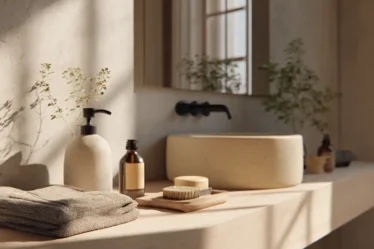
Your Small Bathroom Deserves Better Than a Cluttered Sink
You walk into your bathroom every morning. And every morning, the same problem stares back at you.
Too much stuff. Too little space. A vanity that looks like it gave up years ago.
Most small bathrooms feel this way. Not because the space is hopeless. Because the vanity is wrong for the room.
The good news? You do not need to gut your entire bathroom to fix this. You just need the right vanity idea for your specific situation.
This guide gives you 15 small bathroom vanity ideas that actually work in tight spaces. Some cost under $200. Some require a contractor. Most fall somewhere in between.
Each idea tells you exactly who it works best for, what it costs, and whether renters can do it without losing their deposit.
By the end, you will know which vanity idea fits your bathroom, your budget, and your style. No guessing. No wasted money on the wrong fix.
Why Your Vanity Choice Makes or Breaks a Small Bathroom
The vanity is the first thing anyone sees when they walk into a bathroom. It sets the whole tone.
In a large bathroom, a bad vanity is just an eyesore. In a small bathroom, a bad vanity ruins everything. It blocks walking space. It makes the room feel darker. It adds visual noise that makes 50 square feet feel like 30.
The average American bathroom is between 40 and 50 square feet. That is not much room to work with.
Here is what most people get wrong. They pick a vanity based on how it looks in the store. But in the store, it is sitting in a giant showroom. You need to picture it in YOUR bathroom, against YOUR walls, with YOUR door swinging open next to it.
The National Kitchen and Bath Association recommends at least 21 inches of clear floor space in front of any vanity. That one measurement alone eliminates a lot of options for small bathrooms.
In 2026, the biggest bathroom design trend is purposeful minimalism. Every inch has to earn its place. That means your vanity needs to do two things well: look good and store things. If it only does one, it is the wrong vanity.
Here are 15 ideas that do both.
Idea 1: The Floating Vanity That Frees Up Floor Space

Best For: Modern apartments, small bathrooms under 50 sq ft, anyone who wants their bathroom to feel bigger instantly.
Renter Friendly: No (requires wall mounting)
Budget Range: $300 to $1,200 installed
A floating vanity is mounted directly to the wall. Nothing touches the floor below it. That open space underneath is what makes all the difference.
When your eye can see the floor all the way under the vanity, the room feels larger. It is a simple visual trick. But it works every time.
Standard floor vanities are 21 to 24 inches deep. Floating versions often run 18 to 21 inches. That extra 3 inches of floor space matters more than you think in a tight bathroom.
The space beneath a floating vanity is not wasted either. Roll in a small basket for extra towels. Tuck in a step stool. Store a scale flat on the floor where it stays out of the way.
IKEA’s GODMORGON series starts at 24 inches wide and works well in small bathrooms. The matte white and warm oak finishes are both popular right now.
What to look for when buying: Choose a version with at least one deep drawer, not just shallow shelves. Deep drawers hold more and keep countertops clear.
Idea 2: Corner Vanities That Use Dead Space Brilliantly

Best For: Powder rooms, tiny en-suite bathrooms, L-shaped layouts.
Renter Friendly: Sometimes (depends on plumbing location)
Budget Range: $150 to $500
Most bathrooms have at least one corner that does nothing. Just wall meeting wall. A corner vanity fixes that.
Corner vanities are designed to fit into a 90-degree angle. They come in triangle shapes or angled designs. Most run between 18 and 24 inches wide.
That might sound small. But a corner vanity placed in a dead corner can free up 8 to 10 square feet of open floor space compared to a standard vanity placed on a flat wall.
Wayfair and Home Depot both carry corner vanity units under $300. American Standard also makes a well-reviewed corner pedestal sink line that works in very small spaces.
One styling tip that works well here: hang a tall, narrow mirror directly above the corner vanity. It draws the eye upward and makes the ceiling feel higher.
Quick tip: Before you buy, measure your corner carefully. Not all corners are exactly 90 degrees, especially in older homes. Bring a measuring tape and a notepad when you shop.
Idea 3: Pedestal Sinks With Hidden Storage Added On

Best For: Renters, classic style lovers, bathrooms with tight door clearance.
Renter Friendly: Yes
Budget Range: $25 to $150 for storage additions
Pedestal sinks are beautiful. They are also storage nightmares on their own.
But here is what most people do not know. You can add storage to a pedestal sink without drilling a single hole. And it can look like it was always meant to be there.
The easiest option is a pedestal sink skirt. This is fabric that wraps around the base of the pedestal and hides storage baskets underneath. Fabric skirts in linen or cotton give a clean, simple look. You can find them on Amazon for $20 to $40.
A second option is a freestanding shelf unit that sits beside the pedestal. Choose one that is narrow (10 to 12 inches deep) so it does not crowd the sink. Add matching baskets on each shelf to keep things looking neat.
The third option is a recessed medicine cabinet on the wall above the sink. This moves your storage off the counter and into the wall. More on this in Idea 6.
Pedestal sinks are still in the top five most searched bathroom fixtures on Pinterest. They are not going anywhere. You just need to give them a little backup.
Idea 4: Narrow Vanities Under 18 Inches Deep

Best For: Galley bathrooms, long narrow layouts, bathrooms where door clearance is a problem.
Renter Friendly: No (requires plumbing)
Budget Range: $400 to $1,500
Here is a number that changes everything. Your current vanity is probably 21 to 24 inches deep. A shallow vanity is 15 to 18 inches deep.
That 4 to 6 inch difference gives you significantly more walking space. In a corridor bathroom that is only 12 inches wide between the vanity and the opposite wall, shaving 4 inches off the vanity depth adds about 33% more clearance. That is the difference between squeezing past and walking through comfortably.
Yes, the basin is slightly smaller. That is the honest trade off. But most people adjust within a week and never miss the extra depth.
Brands worth looking at: Kohler’s Tresham collection offers a 20-inch-deep option. Ronbow and Strasser Woodenworks also make well-built narrow options.
A good styling trick for narrow vanities: pair one with a vessel sink. The vessel sits on top of the counter and adds visual height without adding any depth to the cabinet below. It looks dramatic and purposeful instead of small.
Idea 5: Open Shelf Vanities for a Light, Spa-Like Feel

Best For: Minimalists, people who keep tidy bathrooms, modern and boho styles.
Renter Friendly: Yes (many are freestanding)
Budget Range: $200 to $800
Open shelf vanities have no cabinet doors. The shelving below the sink basin is fully visible.
This sounds like it would look messy. In the right hands, it looks like a luxury spa.
The key is organization. Everything on those shelves needs to be intentional. Rolled white towels in a stack. Matching baskets for toiletries. A small plant. That is it.
In 2026, the most popular material combo is warm wood tones (walnut or teak) paired with a white ceramic basin. It is warm without being heavy. Open shelf vanities in this combo are currently among the top saved bathroom images on Houzz.
The practical benefit is real too. Open shelving makes things easier to reach. No doors to open with wet hands. No cabinet hinges to wipe down.
What to look for when buying: Get baskets first, then buy the vanity. Make sure the shelf dimensions actually fit the baskets you plan to use. A lot of people do it backward and end up with baskets that do not fit.
Idea 6: Medicine Cabinet Plus Small Sink Combos

Best For: Anyone who has zero counter space, homeowners who want to maximize every inch.
Renter Friendly: Sometimes (surface mount options exist for renters)
Budget Range: $100 to $600
Here is the problem with small vanities. They give you less counter space. Less counter space means more clutter. More clutter means the bathroom looks worse, not better.
A recessed medicine cabinet solves this by moving your storage into the wall itself.
A standard recessed cabinet sits between wall studs. It goes 3.5 to 4 inches deep into the wall. That gives you real usable shelf space without taking up any room in the bathroom.
Modern medicine cabinets are not the rusty mirror box from your childhood bathroom. Robern’s AiO series includes charging ports, dimmable LED lighting, and a defogging mirror. Kohler and American Standard both offer clean, modern options that look intentional and designed.
If you rent and cannot cut into walls, use a surface-mounted medicine cabinet instead. It sticks out a few inches from the wall. Not as seamless, but it still adds significant storage.
Pair a recessed medicine cabinet with a 24-inch or smaller vanity below. Together, they cover everything: sink, storage, mirror, and light. All in one organized zone.
Idea 7: A Vintage Dresser Turned Into a Vanity

Best For: People who love one-of-a-kind pieces, eclectic or farmhouse style lovers.
Renter Friendly: No (requires plumbing work)
Budget Range: $150 to $400 total (dresser plus conversion)
This is the most personal vanity option on this list. And one of the most affordable.
Find a small vintage dresser at an estate sale or thrift store. Look for one that is 30 to 36 inches wide and 18 to 20 inches deep. Those dimensions work well for a bathroom conversion.
Then have a plumber cut a hole in the top for a vessel sink and run the drain and supply lines through the dresser body. The drawers around the plumbing stay functional for storage.
Protect the wood with marine-grade sealant or waterproof paint before installation. Bathrooms are humid environments. Unprotected wood warps and grows mold.
The result looks completely custom. No one else has the exact same vanity. That is the whole point.
Cost comparison: a custom-built vanity runs $800 to $2,500. A thrift store dresser plus a plumber plus a vessel sink runs $150 to $400. The dresser version wins on price almost every time.
Honest note: This project requires a licensed plumber. Do not attempt the plumbing yourself unless you have real experience. A bad DIY plumbing job costs far more to fix than hiring a pro upfront.
Idea 8: Two-Tone Vanities That Make a Small Bathroom Look Designed

Best For: People who want style without a full renovation, anyone with an existing vanity they want to refresh.
Renter Friendly: Yes (with landlord permission for paint)
Budget Range: $20 to $300 depending on approach
A two-tone vanity has one color on the cabinet body and a different color or material on the countertop. It creates visual depth in a small space.
Right now in 2026, the combinations getting the most attention are forest green base with brass hardware, navy base with a white countertop, and black matte cabinet with natural wood accents.
Here is the simple design logic behind why this works. A darker lower cabinet visually anchors the room. A lighter countertop or top surface reflects light back upward. The room feels taller and more open because of that contrast.
You do not have to repaint the whole vanity to get this effect. Sometimes a hardware swap alone does the job. New drawer pulls and cabinet handles in a contrasting finish can completely change how a vanity looks. A set of brass handles on a white vanity looks like a design choice instead of a default.
New hardware costs $20 to $80 total and takes about 30 minutes to install with a screwdriver. That is the fastest bathroom upgrade on this list.
Idea 9: Vessel Sink Vanities That Add Drama Without Taking Space

Best For: Modern, boho, or eclectic styles. People who want a focal point in a small bathroom.
Renter Friendly: No (requires plumbing)
Budget Range: $50 to $500 for the sink alone
A vessel sink sits on top of the counter. It does not drop down into it. That above-counter position is what makes it useful in a small bathroom.
Because the sink sits high, the cabinet below can be shorter and shallower. You get the basin height you need without the bulky cabinet depth. It is a smart use of vertical space.
Vessel sinks come in ceramic, stone, glass, and concrete. Ceramic options start around $50 on Wayfair or Amazon. Hand-hammered copper versions run $500 or more. There is a wide range to work with depending on your budget.
One thing to plan for: vessel sinks need a taller faucet. Standard faucets sit 4 to 6 inches high. With a vessel sink, you need a faucet that is 8 to 12 inches tall to clear the basin rim comfortably. Buy the faucet and the sink at the same time so you know they work together.
Vessel sinks now make up about 22% of all sink sales in bathroom remodel projects. They are popular because they look high-end even at lower price points.
Idea 10: Mirrored Vanities That Make the Room Feel Twice as Big

Best For: Glam, Art Deco, or maximalist styles. Dark bathrooms with limited natural light.
Renter Friendly: Yes (freestanding options exist)
Budget Range: $200 to $800
Mirrors reflect light. More reflected light makes a small room feel larger. This is not new information. But most people only apply it to the mirror on the wall, not the vanity itself.
A mirrored vanity has mirror panels on the cabinet doors and sometimes the sides. Every surface that catches light bounces it back into the room.
Pair a mirrored vanity with sconce lights on both sides of the mirror above. The combination looks like a Hollywood vanity setup. More importantly, it fills the room with even, flattering light that removes shadows and makes the space feel open.
Mirrored vanities work best in bathrooms with a clear style direction. They are bold. They need a room that can hold them. If your bathroom is neutral and simple, one mirrored vanity becomes the focal point.
One practical note: mirrored surfaces show water spots and fingerprints. Budget a few extra minutes each week for wiping them down.
Idea 11: A Built-In Niche Vanity for a Fully Custom Look

Best For: Homeowners doing a full bathroom renovation. Anyone who wants zero floor footprint.
Renter Friendly: No
Budget Range: $1,200 to $4,000
This is the most involved idea on the list. It is also the one that gets the most “how did you do that?” reactions.
A niche vanity is built directly into the wall. The sink and countertop sit inside a recessed alcove. No cabinet sticks out into the room. No floor space is used at all.
The result looks completely seamless. Like the bathroom was designed around the vanity from the beginning. Because it was.
This requires construction work. You need a contractor to open the wall, frame the niche, tile it (if that is the look you want), and install the plumbing inside. It is a real renovation project.
But here is why it can be worth it. Built-in bathroom features increase home resale value by 5 to 10% according to National Association of Realtors data. It is not just a style upgrade. It is an investment.
Add integrated lighting inside the niche for a designer finish. Small LED strip lights along the top edge of the alcove look especially good at night.
Idea 12: A Narrow Vanity Plus Linen Tower Combo

Best For: Long, narrow bathrooms. People who need serious storage but have limited floor width.
Renter Friendly: Yes (many tower units are freestanding)
Budget Range: $300 to $900 for the set
Here is a simple principle that works in almost every small bathroom. Go vertical.
Floor space is limited. Wall space is often unused. A linen tower takes a 12 to 14 inch wide footprint of floor space and turns it into 6 feet of vertical storage.
Pair a narrow vanity (18 to 24 inches wide) with a matching linen tower right beside it. The tower holds towels, toiletries, extra toilet paper, cleaning supplies. All the things that currently crowd your countertop or sit in a pile under the sink.
IKEA, Home Depot, and Lowe’s all carry coordinated vanity plus tower sets. Buying matching pieces from the same line makes the setup look intentional rather than cobbled together.
With the tower handling storage, your vanity countertop stays completely clear. A clear countertop makes any bathroom look cleaner and larger. It is one of the easiest wins on this list.
Idea 13: Japandi Style Vanities for a Calm, Clutter-Free Bathroom

Best For: Minimalists, anyone overwhelmed by busy bathroom decor, modern and natural style lovers.
Renter Friendly: Yes (if you replace the whole vanity unit)
Budget Range: $400 to $1,500
Japandi design blends Japanese minimalism with Scandinavian warmth. The result is simple, quiet, and very easy to live with.
In a small bathroom, Japandi style is particularly effective because it removes all visual noise. No ornate hardware. No competing colors. No decorative clutter. Just clean lines and natural materials that let the eye rest.
Key features to look for in a Japandi style vanity: natural wood grain finish (light ash or oak), push-to-open drawers with no visible handles, and an integrated basin where the sink and counter are one seamless piece.
That integrated basin detail is practical, not just pretty. No seam between the sink and counter means no grout line to scrub. No caulk to replace every few years. Easier cleaning across the board.
Searches for Japandi bathrooms on Google rose 210% between 2022 and 2024. The trend is not slowing down. IKEA’s YDDINGEN line, West Elm, and CB2 all carry vanities that fit this style well.
Quick tip: Keep the accessories minimal too. One plant. One soap dispenser. That is enough. The style only works if the whole bathroom commits to it.
Idea 14: Smart Vanities With Built-In Tech

Best For: Tech-forward homeowners, people who want to reduce countertop clutter from devices.
Renter Friendly: No (requires electrical work)
Budget Range: $400 to $2,000
Smart vanities are a real product category now. They are not a gimmick anymore.
The best options in 2026 combine a mirror, LED lighting, defogging technology, USB charging ports, and Bluetooth speakers into one unit. Everything you normally need separate devices and cords for gets handled by the vanity itself.
In a small bathroom, this matters. Every device you remove from the counter is visual clutter eliminated. A smart vanity mirror that handles lighting, charging, and music means no charging cables draped over the sink. No Bluetooth speaker on the shelf. No separate LED strip light installation.
Kohler’s Verdera Voice Lighted Mirror includes Amazon Alexa integration. Robern’s AiO series has dimmable lighting and charging ports built in. Krugg Reflect is another well-reviewed option at a slightly lower price point.
One honest note: these require a properly positioned electrical outlet near the vanity. Many older bathrooms do not have one in the right spot. Factor in potential electrical work when budgeting for this option.
The global smart bathroom products market is projected to reach $12.4 billion by 2027. The technology is improving quickly and prices are coming down.
Idea 15: A Full Vanity Makeover for Under $200

Best For: Renters, budget-conscious homeowners, anyone who does not want to replace the whole vanity.
Renter Friendly: Yes (reversible options available)
Budget Range: $75 to $200 total
This one is for everyone who read the previous 14 ideas and thought: I cannot afford any of that right now.
Fair enough. Here is what you can do this weekend for under $200.
Step 1: Paint the cabinet body. Benjamin Moore Advance and Rust-Oleum Cabinet Transformations are both made for furniture and cabinetry. They dry hard and hold up to bathroom humidity. A quart costs $20 to $35. Choose a color that feels intentional, not just whatever the previous owner picked.
Step 2: Swap the hardware. New drawer pulls and cabinet knobs cost $20 to $60 total. This single change updates the look more than most people expect. Brass, matte black, and brushed nickel are all strong choices right now.
Step 3: Add peel and stick contact paper to the countertop. Marble look options on Amazon run $15 to $30 for a roll. Clean the surface well first. Smooth it out carefully to avoid bubbles. It looks surprisingly good and it is completely removable.
Step 4: Hang a new mirror. A simple round or arch mirror in a wood or metal frame costs $40 to $80 at Target, Amazon, or IKEA. Swap out the old builder-grade mirror and the whole vanity area feels new.
Total cost: $95 to $185 depending on your choices. Total time: one weekend afternoon.
Pick One Idea and Start There
You do not need to do all 15 of these things. You need to do one.
Look at your bathroom again. What is the biggest problem? Not enough storage? Wrong size vanity? Everything looks dated? Pick the idea on this list that solves that specific problem first.
If you rent, stick with Ideas 3, 5, 10, or 15. They require no permanent changes.
If you own and have $500 or less to spend, Ideas 1, 4, 8, 12, or 15 all fall in that range with the right choices.
If you are doing a full renovation, Ideas 11, 13, or 14 are worth the investment.
Small bathroom vanity ideas do not have to be complicated. The right compact bathroom vanity for small spaces changes how the entire room feels. It gives you back the storage you lost. It makes the room look considered instead of cluttered.
Start with one. Do it well. The rest can wait.